A batch can leave a central kitchen looking perfectly organized and still become difficult to trace an hour later. A container may be sent to the wrong branch, a label may not match the production record, or a branch may receive fewer units than the dispatch note shows. The operational problem is rarely the truck alone. It is the gap between production, release, loading, and receiving.
This guide provides a practical central kitchen dispatch checklist for restaurant groups that produce sauces, proteins, bakery items, prepared vegetables, or other products in one location and distribute them to several branches.
Why central kitchen dispatch needs its own control point
Production approval answers: “Is this batch ready?” Dispatch must answer a different set of questions:
- Is this the correct approved batch?
- Are the quantity, destination, and delivery route correct?
- Are containers sealed and labels readable?
- Are temperature-controlled items within the restaurant’s approved limits?
- Can the branch connect what it receives to the original production record?
- Is there a clear decision if something changes during loading or transport?
For a deeper explanation of the traceability record itself, read what restaurant batch tracking connects from production to branches.
A step-by-step central kitchen dispatch workflow
- Complete production
- Approve quality
- Pack and label
- Stage by branch
- Check and load
- Release shipment
- Confirm branch receipt
1. Close the production record
Before staging begins, confirm the final produced quantity, batch number, production time, expiry or use-by information, and responsible production user. If actual yield differs from the plan, record the real quantity rather than copying the expected number.
2. Complete the quality release
The required taste, texture, color, weight, temperature, or other product checks should be completed before dispatch. A failed or pending batch must not move into the same staging area as released products. Physical separation matters because a busy loader may not know the status shown in a separate notebook or chat.
3. Pack, seal, and label every handling unit
A dispatch carton may contain several inner containers, but each handling level should remain understandable. Labels should identify the product and connect it to the batch, production and expiry information, and destination where required. Replace damaged or unreadable labels before loading; do not rely on staff remembering what is inside.
4. Stage products by branch
Create a clearly separated staging position for each branch or route. Compare staged quantities with approved branch requirements before the vehicle arrives. This prevents the loading team from solving shortages informally by moving containers between branches without updating the record.
5. Check condition and temperature before loading
Inspect seals, packaging, cleanliness, labels, and visible product condition. Measure a representative sample of temperature-controlled items using the method defined in the restaurant’s procedure. Record the actual reading, not only “OK.” Local requirements and the restaurant’s approved food-safety plan determine the applicable limits.
Temperature control continues after dispatch. The guide to restaurant refrigerator and freezer temperature monitoring explains how branches can maintain the record after storage.
6. Match the load to the dispatch note
Count what physically enters the vehicle. The dispatch note should show the product, batch, quantity, destination, loading time, vehicle or route reference, and responsible person. Any last-minute substitution must be authorized and updated before the vehicle leaves.
7. Release the shipment and start the receiving responsibility
Release should create a clear handover: the central kitchen confirms what left, and the branch confirms what arrived. The branch should be able to accept, reject, or isolate an item with a reason. Use the restaurant food receiving checklist to structure that decision.
A realistic dispatch example
A central kitchen produces 96 containers of chicken marinade with a 48-hour shelf life. After quality approval, the team allocates 30 containers to Branch A, 28 to Branch B, and 38 to Branch C.
During staging, one container allocated to Branch B has a damaged seal. The team isolates it instead of loading it, records the affected batch and quantity, and updates Branch B’s dispatch quantity to 27. The other containers are checked, loaded by branch, and released with the loading time and vehicle reference.
Branch B later receives 27 containers, checks the labels and condition, records the receiving temperature, and accepts the shipment. The production quantity, dispatch adjustment, and receiving result now agree. Without that connected record, the branch might report “one item missing,” while the central kitchen continues to show that 28 were sent.
What should a central kitchen dispatch checklist record?
At minimum, capture:
- dispatch date and loading time;
- product name and batch number;
- production and expiry or use-by information;
- approved quantity and actual loaded quantity;
- destination branch and route or vehicle reference;
- packaging, seal, and label condition;
- temperature reading where applicable;
- quality-release status;
- shortages, substitutions, isolated units, or rejected units;
- name or user responsible for release;
- branch receiving outcome and any reason for rejection.
The checklist should support a decision, not merely prove that someone ticked a box.
Paper dispatch sheet vs a connected operational record
Paper can work if it is complete, legible, reviewed, and consistently filed. The weakness appears when different teams hold different versions of the same shipment.
Common dispatch failures and the control for each one
Wrong branch or wrong quantity
Stage by branch, use a destination check at loading, and record actual loaded quantities rather than planned quantities.
Approved and unapproved products mixed together
Use physical status separation and require a quality-release check before a product enters the dispatch zone.
Labels do not match the product
Verify product, batch, dates, and destination against the record during packing and again during loading.
Product leaves correctly but arrives with a problem
Keep dispatch and receiving as two separate decisions. Record loading condition and temperature, then require the branch to inspect what actually arrived.
No one follows up on recurring rejections
Review rejection reasons by product, branch, route, and supplier or central-kitchen team. A recurring pattern should lead to a corrective task, not another isolated message.
How Shamel supports central kitchen dispatch and branch handover
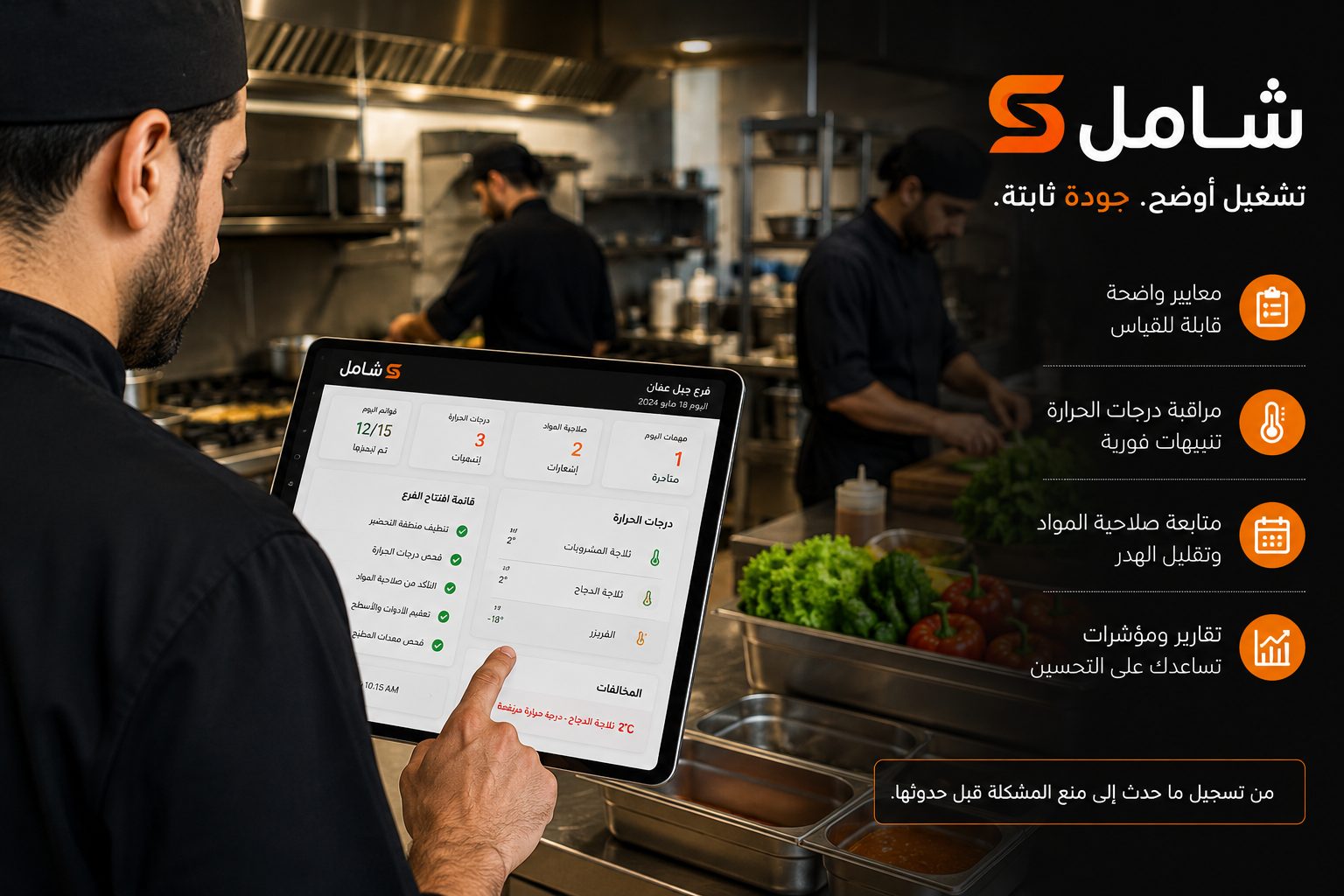
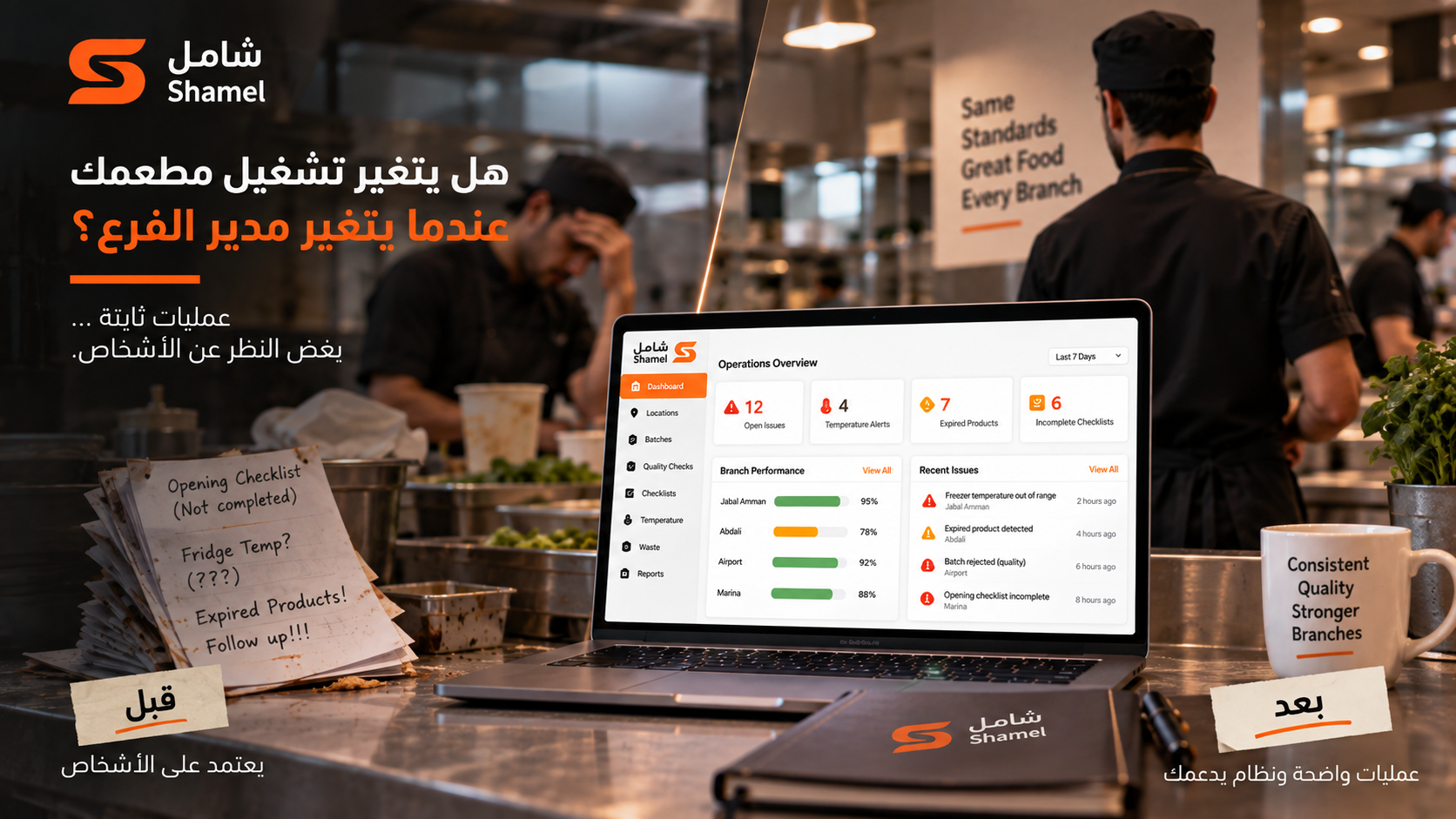
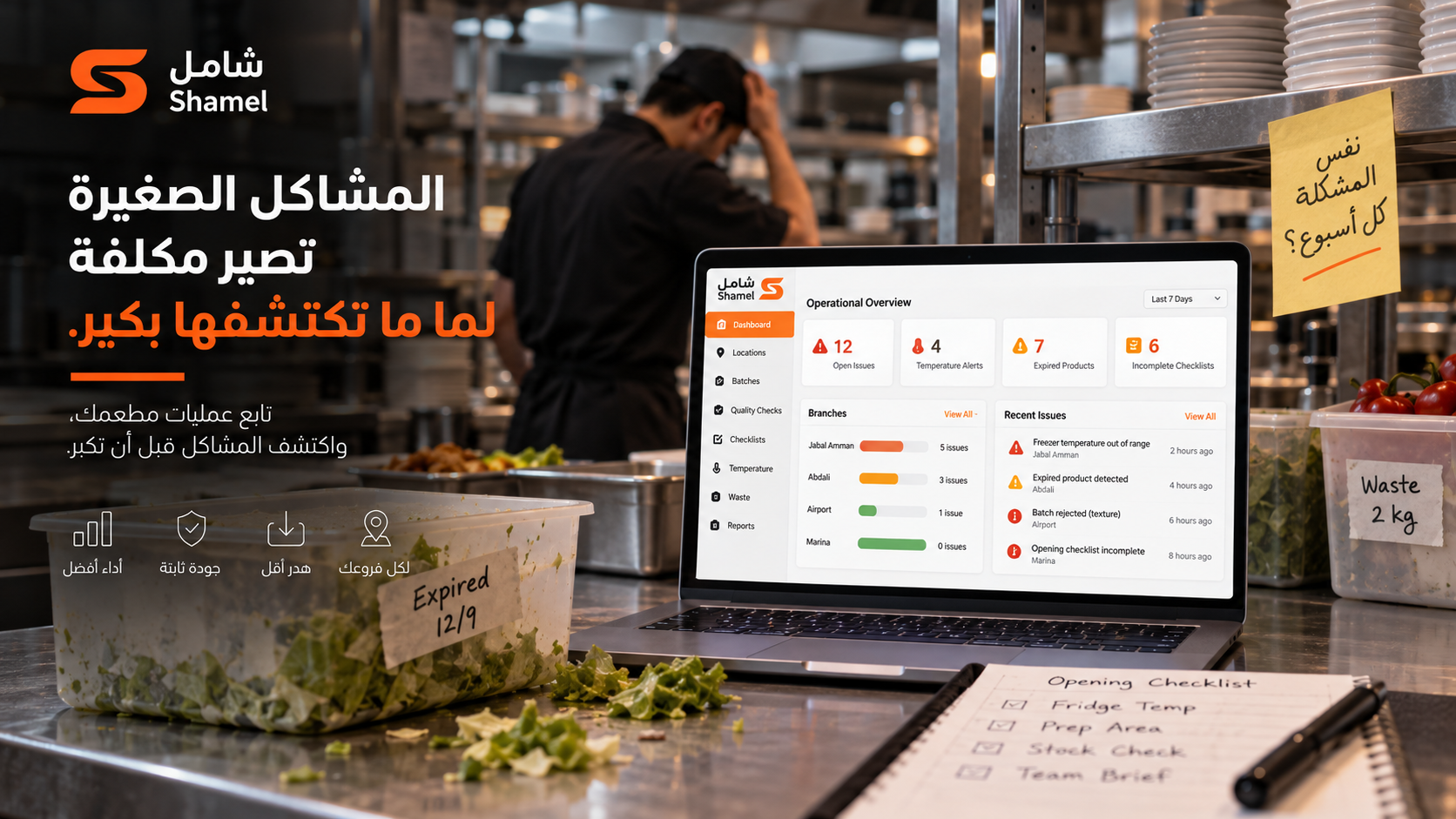
Shamel can connect production batches, production quality checks, labels, expiry information, branch visibility, and receiving approval or rejection. Temperature records, tasks and checklists, operational violations, and reporting can support the restaurant’s own dispatch and follow-up procedure.
This does not replace applicable regulation, professional food-safety advice, or management judgment. It gives the team one operational trail for the standards it has already defined.
For the wider management view, see how to maintain consistent quality across multiple restaurant locations.
Want to connect central-kitchen production, dispatch, and branch receiving in one operational trail? Request a Shamel demo.
Frequently Asked Questions
What is a central kitchen dispatch checklist?
It is a documented set of checks used before food leaves a central kitchen, covering batch approval, quantities, labels, packaging, temperature where applicable, destination, loading, and branch handover.
Who should release food from a central kitchen?
A trained, authorized employee should confirm the release. The person needs access to the production status, quality result, branch requirements, dispatch record, and the authority to stop or correct a shipment.
Should dispatch and receiving use the same record?
They should be connected but remain separate decisions. Dispatch confirms what left the central kitchen; receiving confirms what physically arrived at the branch.
What should happen when a quantity changes during loading?
Record the actual loaded quantity, the reason for the change, and any authorization before release. The destination branch should see the updated quantity before or with the shipment.
How should rejected products be handled at the branch?
The branch should record the affected product and batch, quantity, reason, evidence where required, and final action. The item must be clearly separated so it is not used accidentally.