# Does Your Restaurant Change When the Branch Manager Changes?
In many restaurants, you can tell when a particular manager is off before anyone tells you.
Tasks start getting missed.
Follow-up decreases.
Quality changes.
And small procedures that normally happen every day begin to disappear.
Then the manager returns, and everything goes back to normal.
That raises an important question:
Do you have a strong operating system, or a strong person carrying the operation?
Great managers are incredibly valuable.
The risk begins when the performance of a location depends entirely on that manager being present.
Great Employees Aren't a Replacement for Systems
Every restaurant needs good people.
But your best employees shouldn't be the only place where operational knowledge is stored.
If only the branch manager knows:
- What needs to be checked at opening.
- When temperatures should be recorded.
- How approaching expiry is handled.
- What needs to happen before closing.
- When a product or batch should be rejected.
- Which issues need management attention.
then you don't have a fully defined process.
You have knowledge stored inside a person.
When that person leaves, some of that knowledge can leave with them.
Turn "They Know What to Do" Into a Process
Ask yourself this about every important restaurant procedure:
If a new manager started tomorrow, could they understand what needs to happen without depending on the previous manager?
If the answer is no, the process probably needs to be documented and structured more clearly.
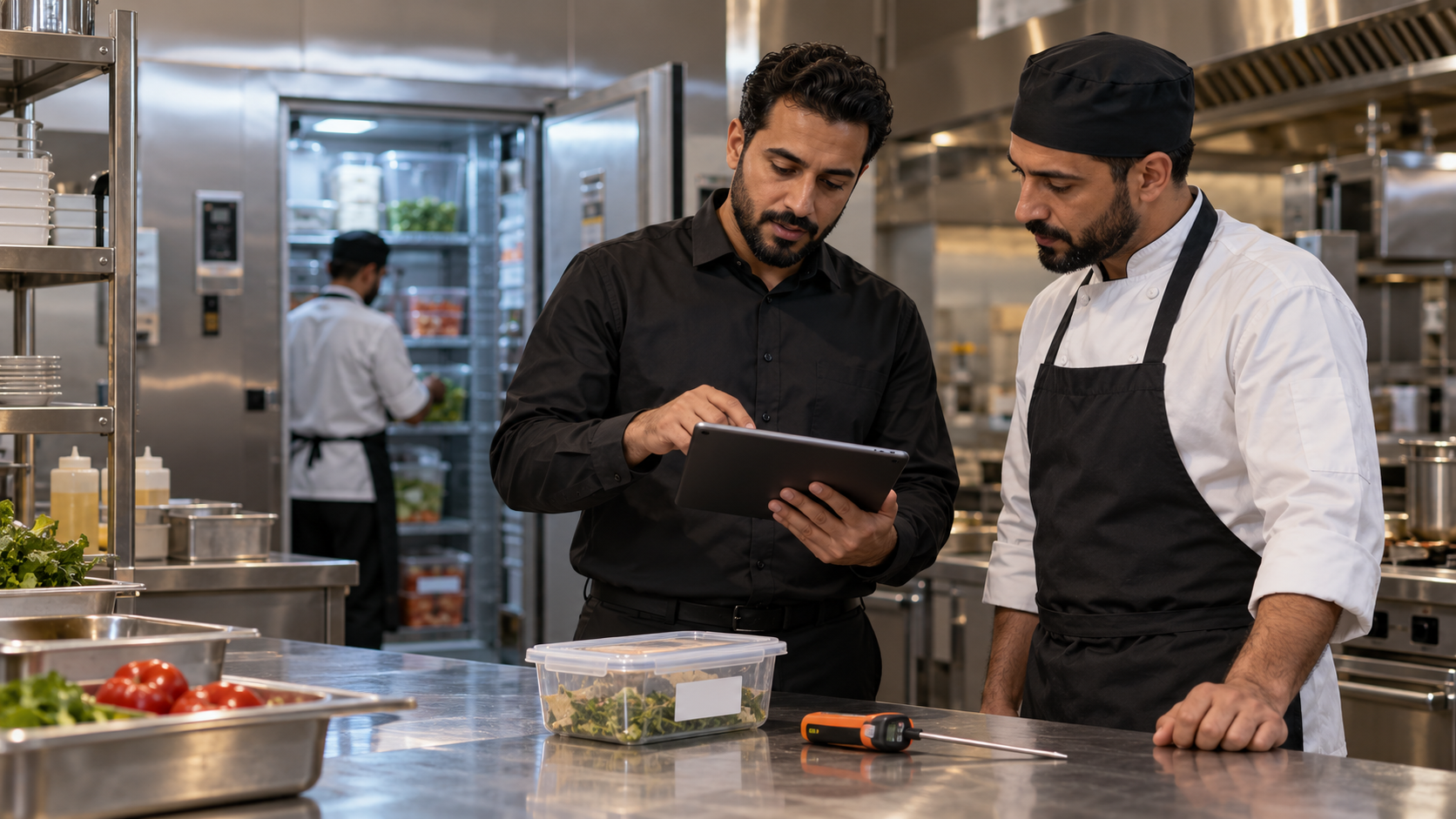
Instead of a manager simply remembering to check refrigerators every morning, there should be a defined task.
Instead of remembering when a product expires, expiry information should be recorded and visible.
Instead of management hearing about problems only when someone decides to call, operational exceptions should be recorded and surfaced.
Operational knowledge should live in the system, not only in someone's head.
Define What Shouldn't Change
The goal isn't to make employees work like robots.
But certain standards shouldn't change depending on who's managing the shift.
For example:
- Quality standards.
- Core production procedures.
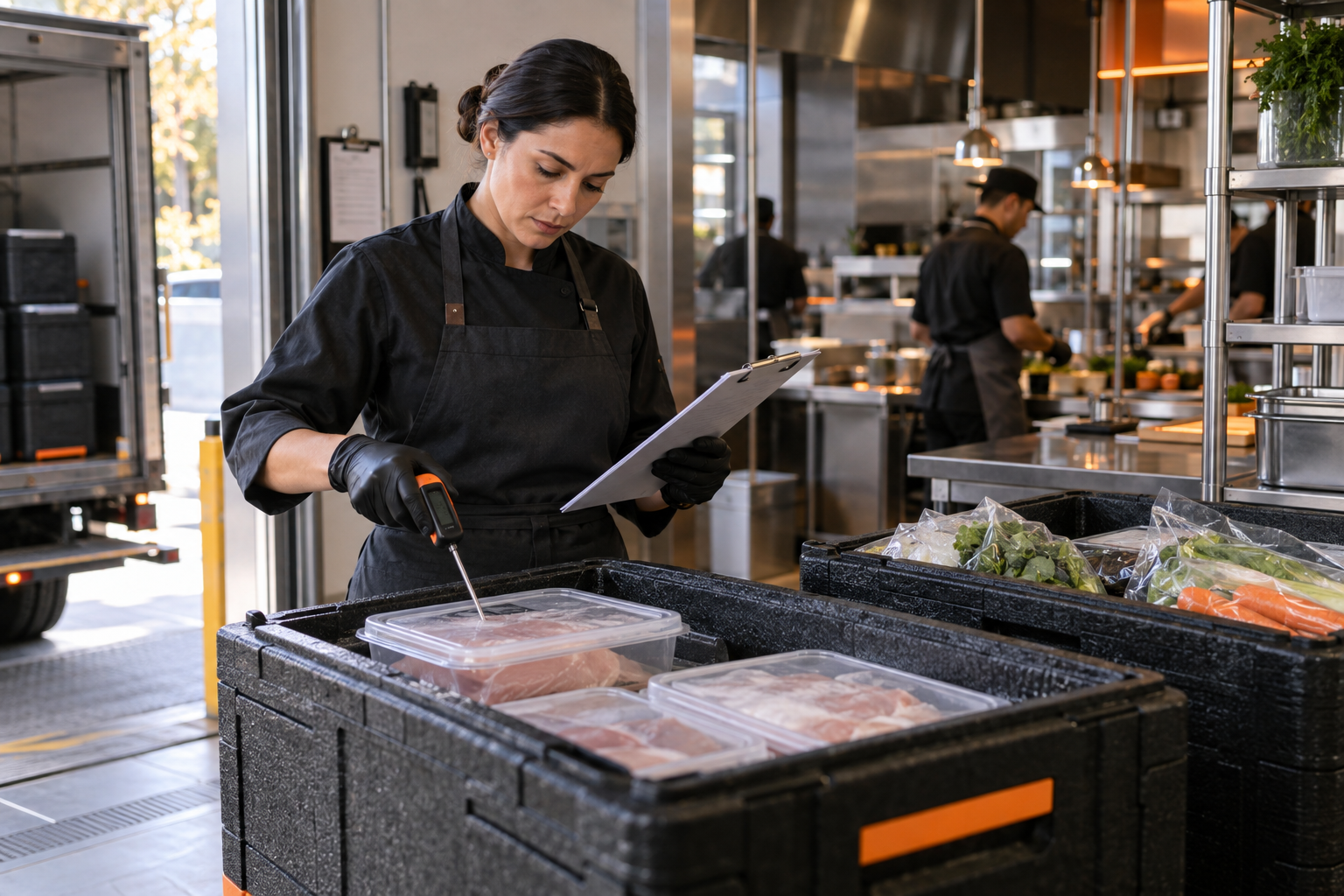
- Receiving checks.
- Cleaning requirements.
- Temperature recording.
- Expiry monitoring.
- Opening and closing procedures.
- Issue and violation documentation.
These are the processes that protect operational consistency when teams change.
Make Responsibility Clear
Sometimes the problem isn't that employees don't know about a task.
Everyone knows about it, but nobody clearly owns it.
"Someone check the refrigerator."
"Make sure expiry is okay."
"Don't forget the closing checklist."
Those are instructions.
They're not a clear operating process.
A better process defines:
What needs to happen?
Who is responsible?
When should it happen?
Was it completed?
What happens if it isn't?
Clear ownership reduces the amount of constant manual follow-up required from managers.
Managers Should Manage Exceptions
A good manager shouldn't spend the entire shift reminding employees about every routine task.
With clearer systems, the manager can focus on higher-value questions.
Instead of:
"Did you record the temperature?"
"Did you complete the checklist?"
"Did you check expiry?"
the questions become:
Why wasn't this task completed?
Why was this temperature outside the defined range?
Why does this product keep getting rejected?
Why did waste increase this week?
The manager moves from chasing tasks to managing problems and improving operations.
What Happens When You Have Five Locations?
At one restaurant, a strong manager may compensate for a weak operating system.
Across multiple locations, that becomes much harder.
One experienced manager.
One new manager.
Another manager on leave.
New employees.
Different shifts.
If operations depend heavily on individuals, locations gradually begin developing their own ways of working.
That's where consistency starts to disappear.
A Good System Doesn't Replace the Manager
It makes the manager more effective.
It gives them a clearer view of what happened, what didn't happen, and where intervention is required.
It also gives operations leadership visibility without calling every branch manager repeatedly throughout the day.
The goal isn't to monitor people.
The goal is to make the operating process itself visible and measurable.
Where Shamel Fits
Shamel is built around this principle:
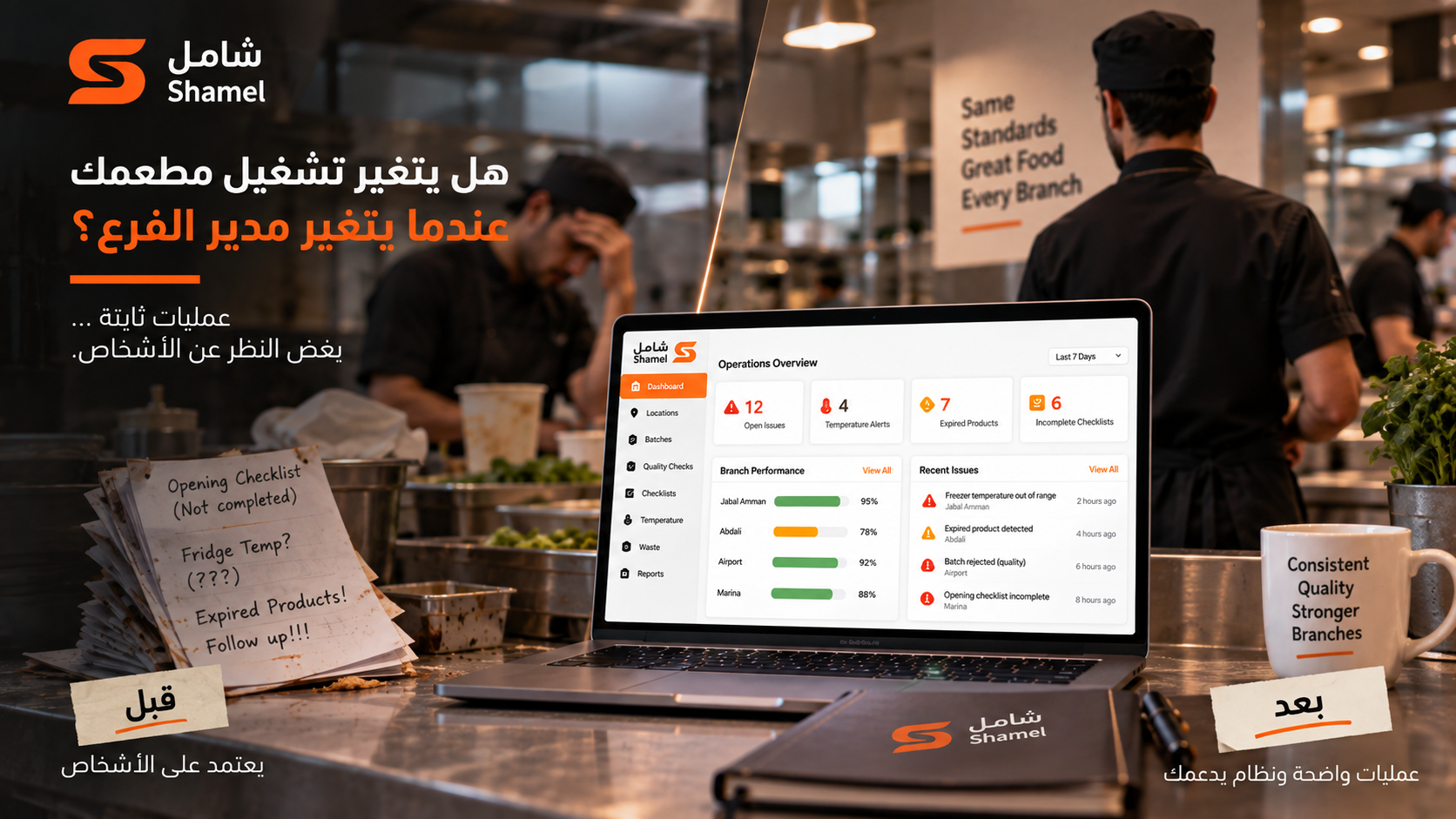
Turn restaurant standards into clear daily processes that teams can execute and management can monitor.
Shamel connects:
- Tasks and checklists.
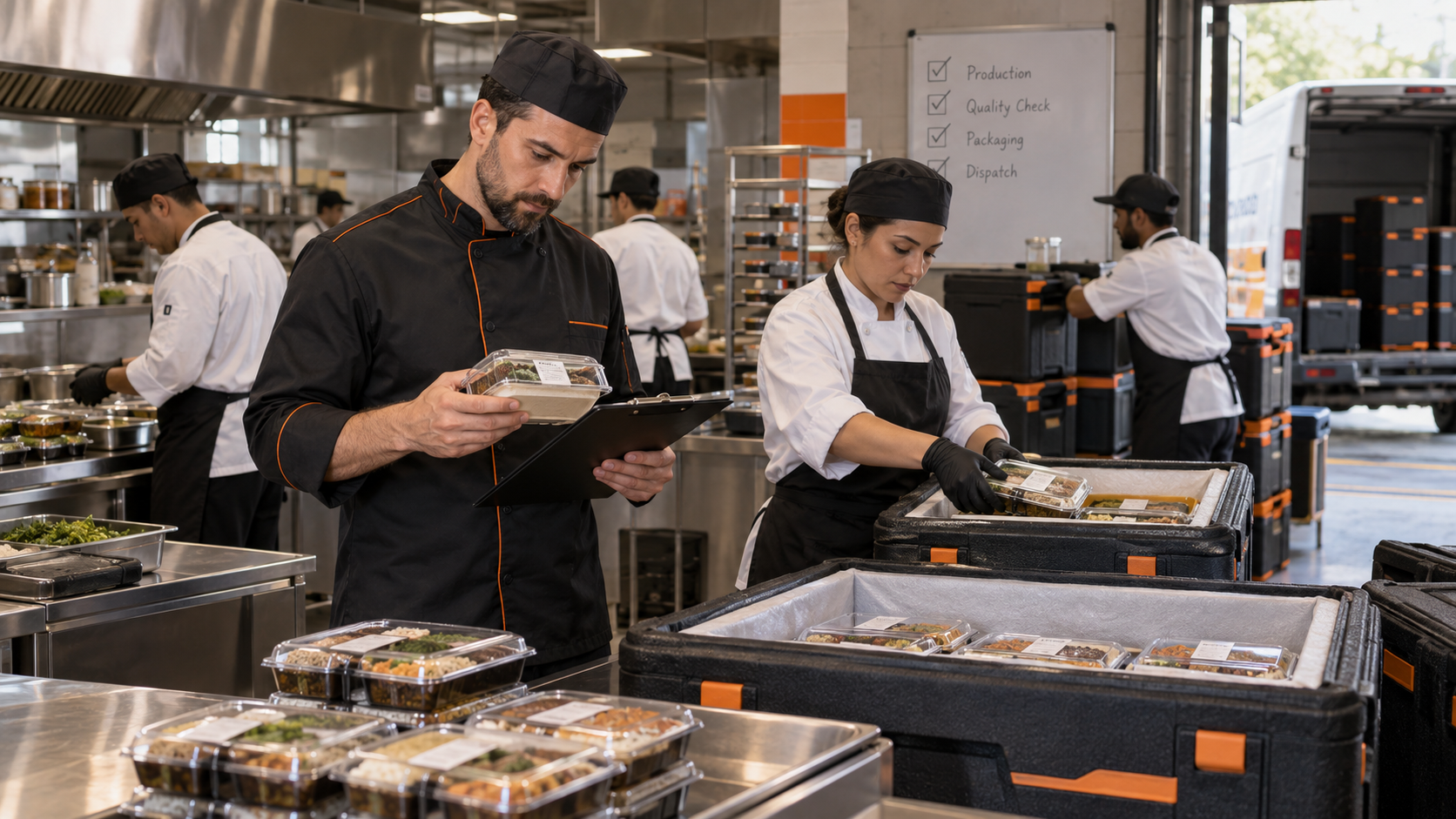
- Production batches.
- Quality checks.
- Approvals and receiving.
- Temperature monitoring.
- Expiry dates and times.
- Operational violations.
- Waste.
- Location reporting.
Instead of depending on what a manager remembers, core operating procedures become part of a system that teams can execute and management can follow.
Most importantly, when an employee or manager changes, the operating process doesn't need to start again from zero.
Build a Restaurant That Runs on Systems, Not Memory
Your best managers will always matter.
But a scalable restaurant shouldn't depend on one person being present to maintain its operating standard.
As standards become clearer, tasks become measurable, and problems become visible, maintaining consistency across locations, shifts, and teams becomes easier.
People run restaurants.
Systems help them run those restaurants to the same standard every day.
See What This Could Look Like in Your Restaurant
See how Shamel can turn your restaurant's quality and operating standards into daily processes that can be followed across every location.
Request a free Shamel demo.