# How to Know What's Happening Across Your Restaurant Locations
When you operate one restaurant, staying close to the details is possible.
You can walk through the kitchen, speak with the manager, check operations, notice quality problems, and get a reasonable picture of how the day is going.
Add a second, third, or fifth location, and things change.
You're managing more restaurants while seeing less of what happens inside each one.
The problem isn't necessarily that your teams aren't doing their jobs.
The problem is visibility.
WhatsApp Doesn't Give You the Full Picture
Many restaurant teams manage daily operations through a combination of WhatsApp messages, phone calls, paper forms, spreadsheets, and photos.
These tools can be useful for communication.
But communication isn't the same as an operational system.
You might hear about a problem when someone sends you a message.
But what about the things nobody messages you about?
- An opening checklist wasn't completed.
- A temperature reading went outside its defined range.
- A production batch was rejected.
- A product is approaching expiry.
- Food was discarded.
- The same problem keeps happening at one location.
If nobody reports it, you may never know it happened.
You Don't Need to See Everything
Restaurant owners and operations managers don't need to review every task completed by every employee.
They need to know what requires their attention.
Instead of reviewing hundreds of daily activities, you should be able to quickly answer:
- Which location has problems today?
- Which critical tasks weren't completed?
- Were there abnormal temperature readings?
- Which products are approaching expiry?
- Were any production batches rejected?
- Where is waste occurring?
- Which problems keep recurring?
This shifts management away from constantly watching employees and toward managing by exception.
Make Every Important Process Leave a Record
If an important process isn't recorded, reviewing it later becomes difficult.
And when a problem isn't documented, understanding why it happened becomes even harder.
A production batch should tell you when it was produced, who produced it, its shelf life, and where it was sent.
A quality check should show whether the batch was approved or rejected and why.
A temperature reading should show whether it was within the defined range.
A discarded product should show the quantity and reason.
Individually, these are simple records.
Connected together, they begin to tell the operational story of each location.
From "What Happened?" to "I Can See What's Happening"
There's a major difference between calling a branch manager at the end of the day and asking:
"How did everything go today?"
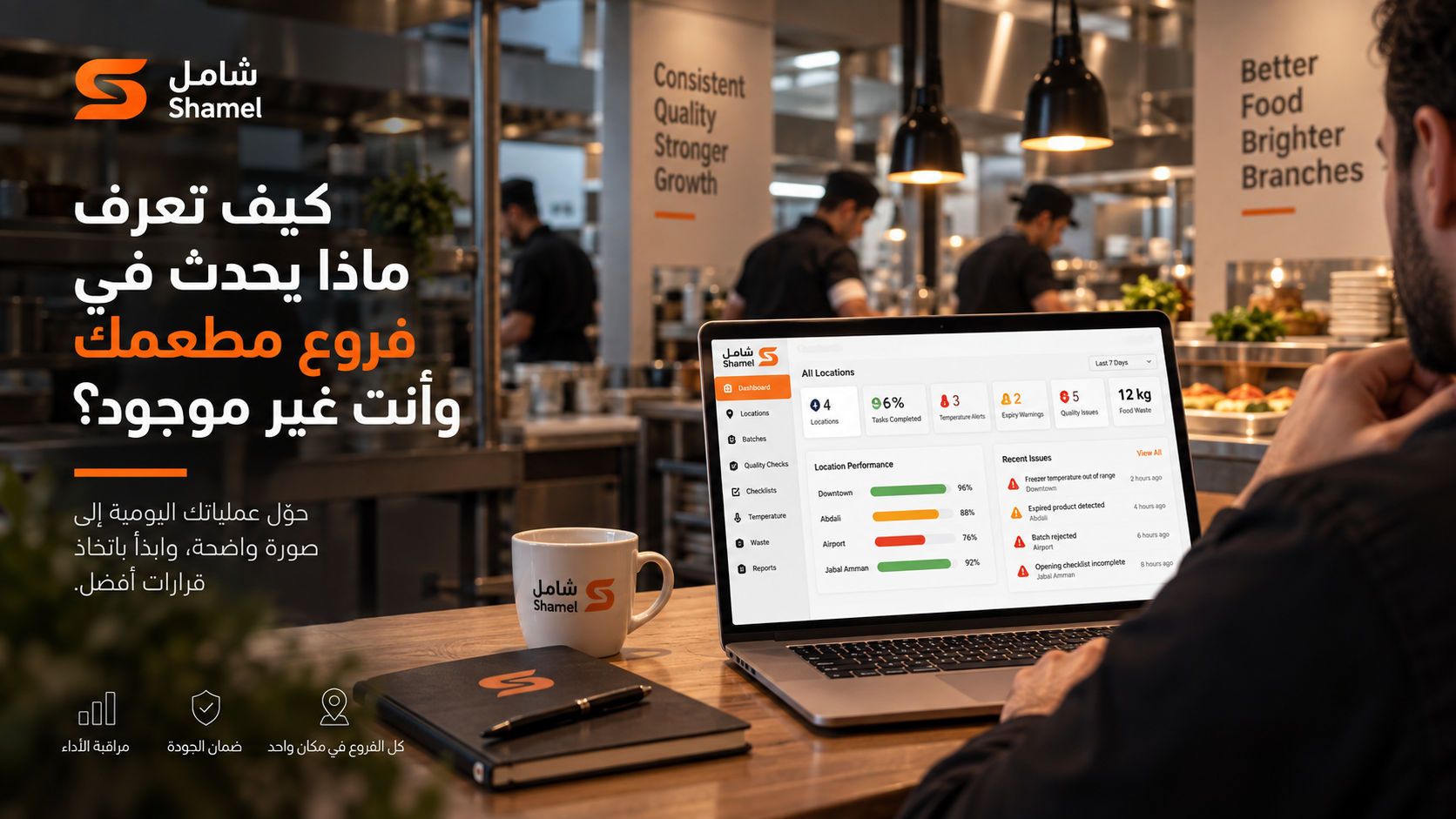
and having an operational dashboard showing what actually happened.
The first depends on what someone remembers and chooses to report.
The second is built from operational data.
That doesn't replace the branch manager.
It gives managers and leadership a shared view based on information rather than impressions.
Small Problems Can Be Important Signals
Large operational problems rarely appear without warning.
They often start as small signals.
A refrigerator repeatedly goes outside its expected range.
An opening checklist is frequently incomplete.
The same product is discarded every week.
One location rejects more central-kitchen batches than the others.
Each incident may look insignificant on its own.
Repeated incidents tell a different story.
Good operations management doesn't just identify incidents. It identifies the patterns behind them.
Bring Every Location Into One View
As the number of locations grows, comparison becomes increasingly important.
Instead of reviewing each branch separately, management should be able to see performance across the company and investigate details only where necessary.
For example:
Location One
96% task completion with no significant operational issues.
Location Two
Multiple abnormal temperature readings this week.
Location Three
Increasing product waste.
Location Four
Repeated batch rejections during receiving.
Within minutes, management knows where attention is needed.
Where Shamel Fits
Shamel is built for restaurants that want to turn quality and operational standards into measurable daily processes.
Instead of spreading operational information across paper, messages, spreadsheets, and employee memory, Shamel brings core quality operations into one system.
With Shamel, restaurant teams can manage and monitor:
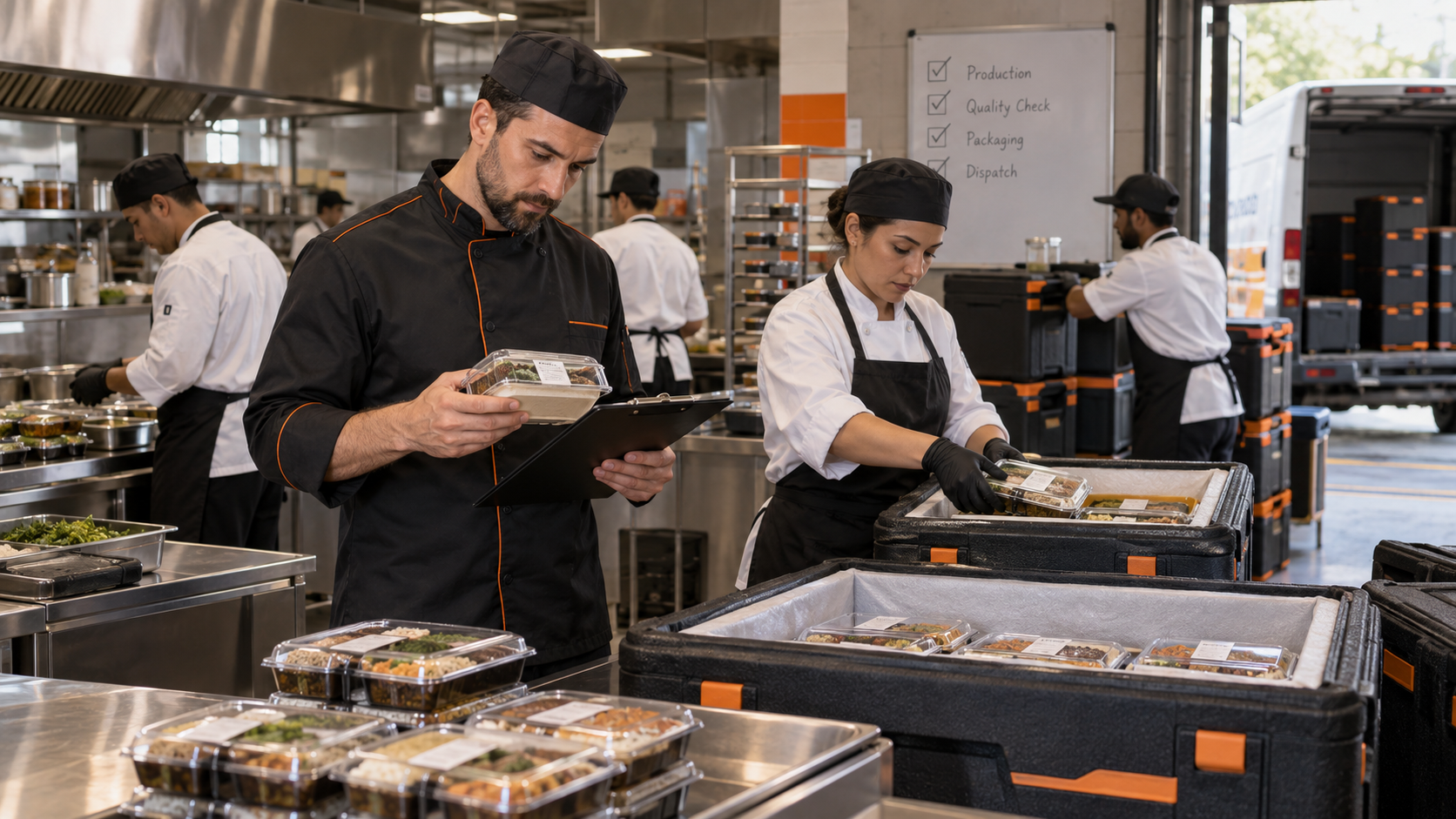
- Production batches from creation to closure.
- Quality checks and approvals.
- Batch receiving and rejection between locations.
- Product expiry dates and times.
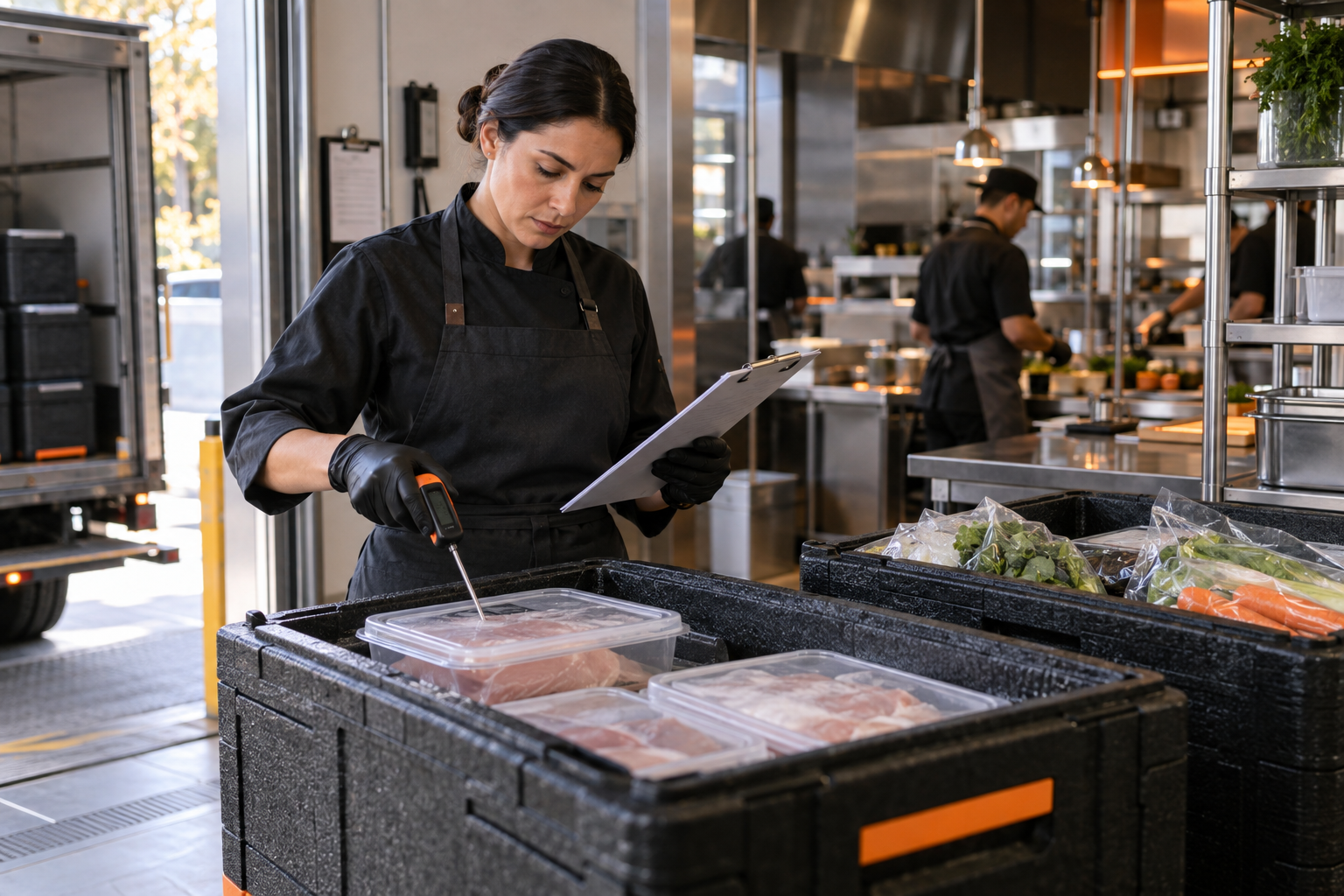
- Refrigerator, freezer, and asset temperatures.
- Tasks and operational checklists.
- Operational violations.
- Waste and discarded products.
- Location performance through reports and operational data.
The goal isn't to make you watch another dashboard all day.
The goal is to show you where your attention is needed.
Don't Manage Five Locations Like Five Separate Restaurants
As a restaurant grows, adding employees and managers isn't enough.
The management system itself needs to grow.
Standards should be clear.
Execution should be measurable.
Problems should be visible.
And management should be able to understand what's happening across every location.
That's how restaurant groups move from management based on people and manual follow-up toward an operating system that can scale with the business.
See Shamel in Your Restaurant
If you're a restaurant owner or operations manager responsible for multiple locations, see what operations look like when quality and daily processes are connected in one place.
Book a free Shamel demo and see how it can fit your restaurant operations.