Why Does the Same Dish Change From One Branch to Another?
A customer orders the same dish from two branches of the same restaurant, but receives two different experiences: a larger portion at one branch, a different sauce at another, better presentation in one location, or a lower serving temperature elsewhere.
To the customer, the brand is the same. They do not care that one branch was busy, the chef changed, or instructions arrived late. They expect the same result every time.
For management, inconsistent quality creates more than one complaint. It leads to:
- Remakes, refunds, and customer recovery costs.
- Food waste caused by inconsistent portions or preparation.
- Uneven ratings between branches.
- Results that depend on one experienced employee rather than a repeatable system.
- Time lost trying to identify where a problem started and what happened next.
The core problem is often not a lack of effort. It is that the quality standard does not move from management into daily execution in a measurable way.
Where Quality Breaks Down Across Branches
The recipe exists, but execution varies
A recipe may be documented, but does every employee know the exact portion size? Are batch quantities calculated consistently? Are ingredient or quantity changes recorded? When the answers remain verbal, each branch gradually creates its own version of the product.
Quality checks depend on memory
“Make sure the quality is good” is not a usable standard. A quality gate needs defined checks such as taste, texture, color, and temperature, along with a responsible approver and a recorded result.
Branches receive products without a quality gate
A batch can leave the central kitchen and enter branch operations immediately. Without a documented accept-or-reject step and a rejection reason, it becomes difficult to determine whether the problem occurred during production, transport, or receiving.
Operational evidence is scattered
A temperature photo sits in a chat, a note stays on paper, and a rejected batch appears in another conversation. When something goes wrong, management reconstructs the story after the fact instead of seeing the exception as it happens.
The Cost of Inconsistent Quality
Small variations stop being small when repeated across several branches. A slight over-portion becomes a monthly cost. One unchecked batch may reach dozens of customers. A missed opening task can affect an entire service period.
There is also a less visible cost: management time. Without a system, managers spend more time making calls, reviewing photos, questioning staff, and deciding which version of events is accurate.
Standardization reduces that noise by placing the standard, execution, and evidence in one operating flow.
A Five-Step System for Consistent Quality
Do not begin with dozens of forms. Start with the products and processes that directly affect guest experience or food safety.
1. Define the standard
Document the recipe, portion size, units, shelf life, temperature limits, and checks for taste, texture, and color. The standard should be clear enough for different people to produce the same expected result.
2. Turn the standard into daily execution
Connect the standard to batches, tasks, and checklists instead of leaving it in a training file. When employees create a batch, the required quantities and steps should appear within the workflow.
3. Add approval gates
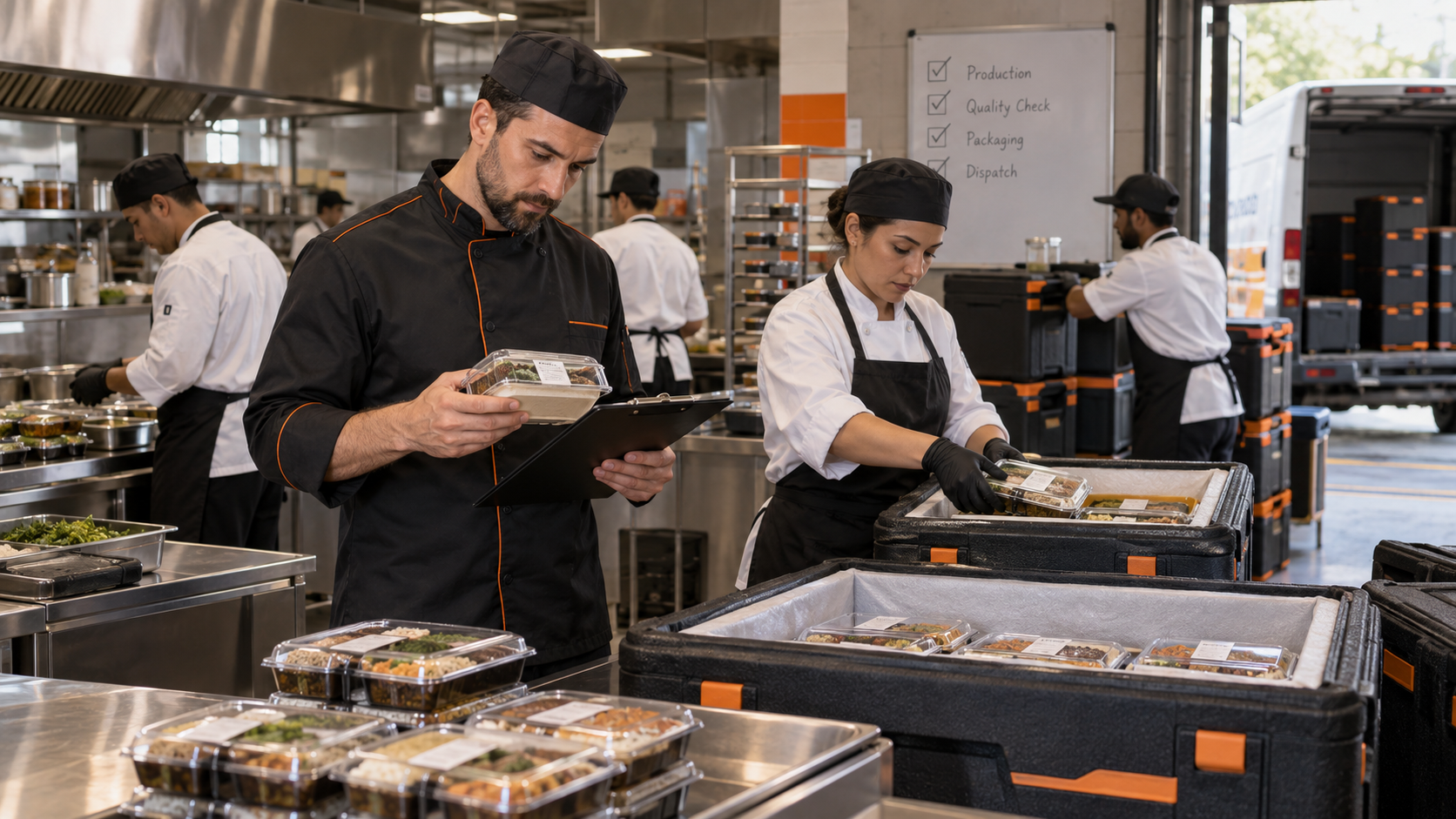
Separate production and receiving when needed. A central-kitchen lead approves the batch, then the branch manager accepts it or rejects it with a reason. A problem can no longer move silently from one location to another.
4. Monitor exceptions, not every movement
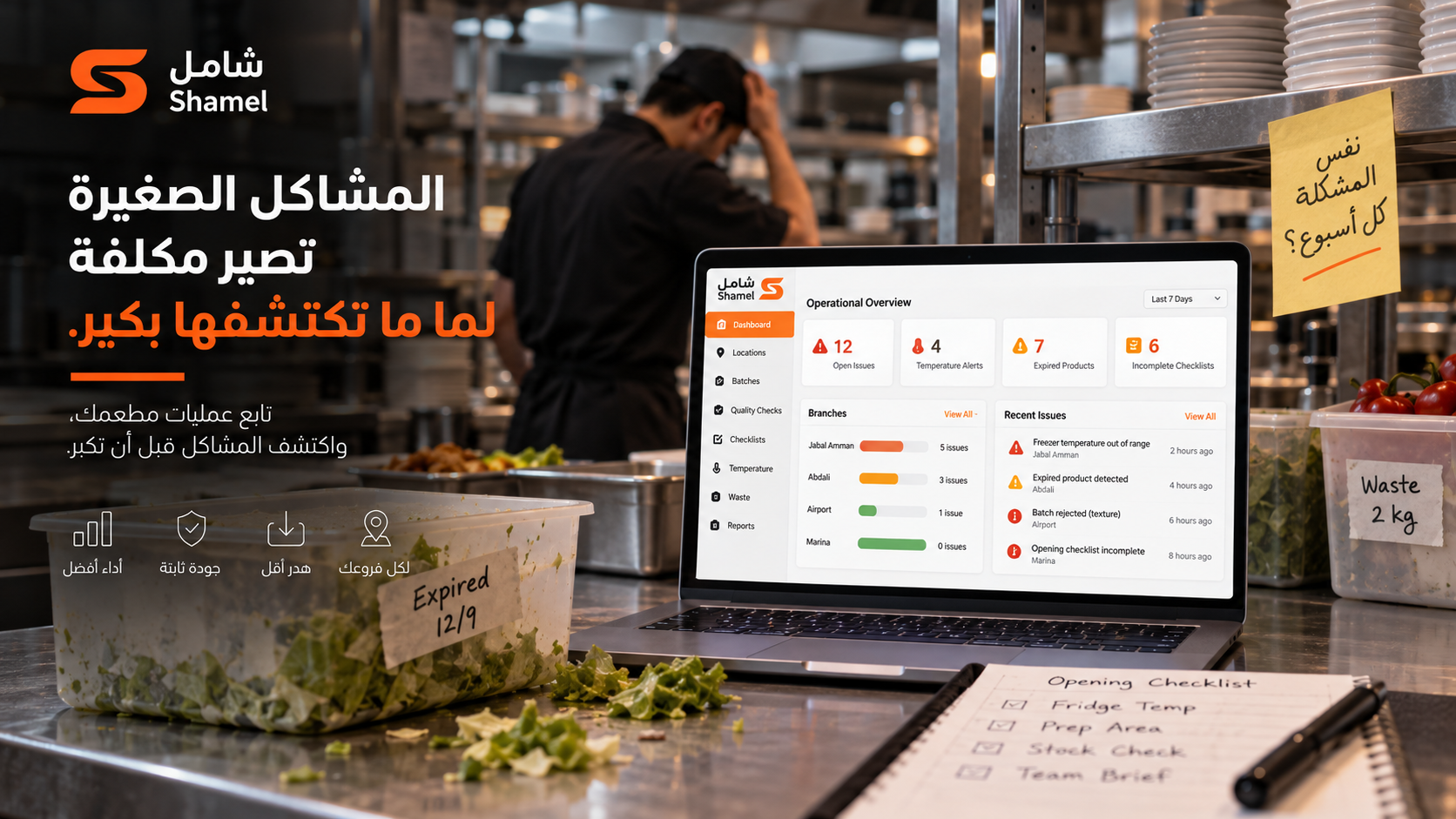
Operations managers do not need to watch every plate. They need visibility into exceptions: a rejected batch, an out-of-range temperature, an incomplete opening checklist, or an expired product with no recorded action.
5. Improve the standard using evidence
Repeated rejection reasons or recurring issues at one branch create a clear investigation signal. Review the recipe, training, transport, or equipment; update the process; then monitor whether performance improves.
This approach reflects a broader food-safety principle: risk control requires a management system, not only a response after something goes wrong.
Before Shamel and After Shamel
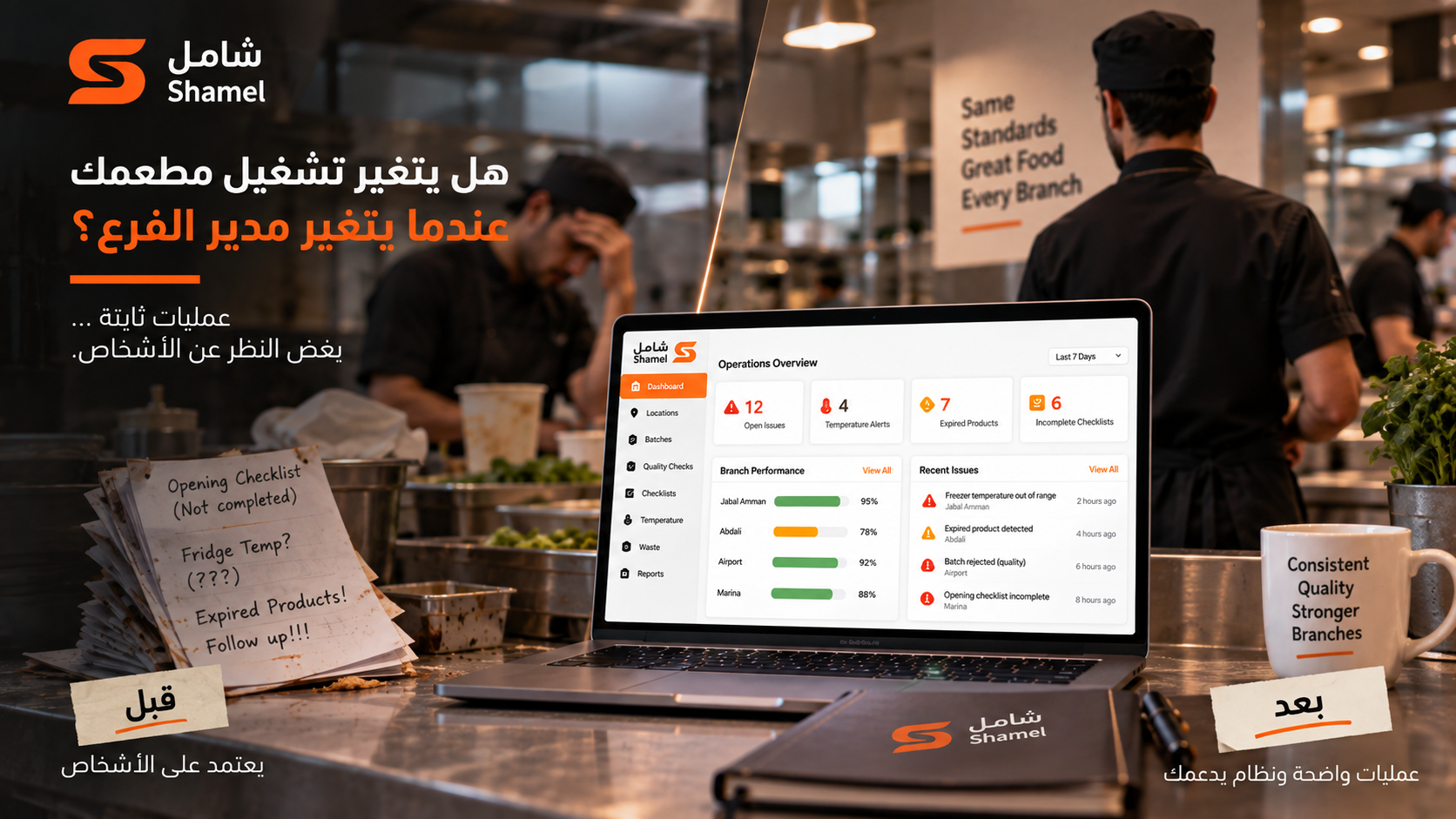
Shamel does not replace the experience of a chef or operations manager. It turns that experience into a system the team can follow and gives management evidence of what was completed, missed, accepted, or rejected.
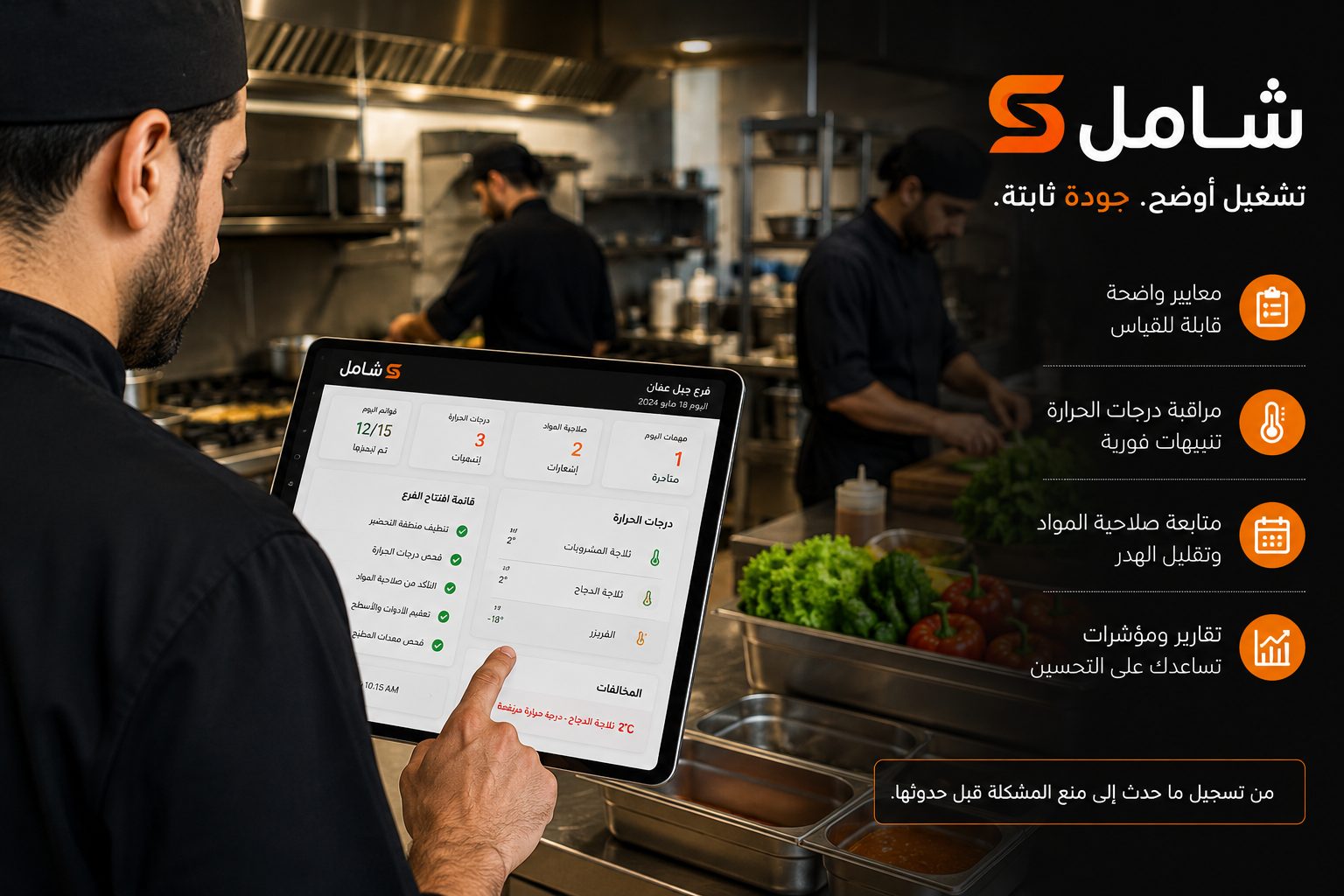
With Shamel, restaurants can manage recipes and batches, perform quality checks, document receiving decisions, print batch labels, track expiry, record temperatures, and surface violations from one operating view.
Read our guide to restaurant expiry-date management to see how consistent quality connects with batch traceability and timely expiry alerts.
How to Start This Week
Choose one high-volume product or one that receives frequent complaints, then run a focused pilot:
- Document its recipe, portion, and quality limits.
- Assign who executes and who approves at the central kitchen and branch.
- Track each batch from production to receiving.
- Record rejection and deviation reasons instead of relying on verbal feedback.
- Review the results after one week and identify the most frequent cause.
If the workflow succeeds, extend it gradually to other critical products and branches. The goal is not to add paperwork. It is to reduce the parts of quality control that depend on memory and individual judgment.
Visit the Shamel blog for more practical guides on restaurant operations, expiry tracking, and waste reduction.
Give Customers the Same Quality at Every Branch
Every new branch creates a growth opportunity, but it also adds more points where execution can vary. When standards, approvals, and alerts follow one system, management can expand without losing control of the details that built the restaurant’s reputation.
Request a free Shamel demo to see how your central kitchen and branches can operate through one measurable quality workflow.
- Define the standard
- Execute daily work
- Verify quality
- Monitor every location
- Flag exceptions
- Improve the process
Frequently Asked Questions
What does restaurant quality standardization mean?
It means ensuring recipes, portions, checks, and receiving steps follow the same defined standards, while deviations and corrective actions are documented instead of handled only through memory or verbal instructions.
Are written recipes enough to maintain consistent quality?
No. Recipes are one part of the system. Consistency also requires batch-level execution, clear responsibilities, approval gates, and monitoring of temperature, expiry, and operational exceptions.
How can I find the cause of inconsistent quality at one branch?
Link each event to the branch, batch, time, responsible person, and inspection result. Recurring rejection reasons or violations then make root-cause investigation faster and more reliable.
Does Shamel support restaurants with a central kitchen?
Yes. Shamel supports production approval in the central kitchen followed by receiving approval at the branch, including documented acceptance or rejection reasons.
Where should I start if I have many products and branches?
Start with one high-volume or high-risk product. Apply the standard and tracking workflow for one week, review the evidence, and then expand gradually.