# How to Monitor Restaurant Refrigerator and Freezer Temperatures
Last updated: September 12, 2026 Author: Mustafa Muhisen, Founder of Shamel
Monitoring restaurant refrigerator and freezer temperatures means taking readings at defined times, recording them, and following a clear corrective procedure when a reading falls outside the approved range. Looking at the equipment display or confirming that the unit is running is not enough. Managers need a record showing the reading, time, employee, and action taken.
Why Should Restaurants Record Refrigerator Temperatures?
Temperature records help teams identify problems before they lead to food loss or a food safety risk. A refrigerator may continue running and sounding normal even while its internal temperature is rising.
This may happen because of:
- A door being left open.
- Large quantities of warm food being loaded.
- Products blocking airflow.
- A damaged door seal.
- A faulty sensor or cooling system.
- A power interruption.
- Frequent door opening during preparation.
A single reading provides limited information, but a consistent log reveals patterns. If the temperature rises at the same time every day, the cause may be an operational practice rather than a sudden equipment failure.
What Temperature Should Restaurant Refrigerators and Freezers Maintain?
Restaurants should follow the limits established in their food safety procedures and local regulations. As a widely used reference, the FDA Food Code specifies cold holding at 5°C or below for food requiring time and temperature control, subject to its detailed conditions and exceptions.
The FDA also recommends maintaining freezers at -18°C or below.
These figures are general references and do not replace local regulatory requirements or product-specific storage instructions.
Is the Equipment Display Enough?
No. The display may show the temperature near one sensor rather than the actual temperature across the entire refrigerator. The display or sensor may also require calibration.
Use an independent appliance thermometer, particularly in units without a reliable visible reading. Avoid placing it directly beside the door or cold-air outlet, as these positions may not represent the overall condition of the unit.
There is also a difference between:
- Air temperature: Used to monitor equipment performance.
- Product temperature: Used to evaluate the actual condition of food when a problem is suspected.
When an abnormal reading appears, verify it with another thermometer and check sensitive products according to your approved procedure.
How Often Should Temperatures Be Recorded?
There is no single schedule suitable for every restaurant. Frequency depends on the equipment, stored products, operating volume, and how often doors are opened.
A practical schedule may include:
- Before preparation or opening.
- During the shift or peak period.
- Before closing.
- After a power interruption or maintenance.
- When receiving chilled or frozen products.
- When staff notice a leak, unusual sound, or change in cooling performance.
Avoid taking readings at random times. Consistent measurement times make it easier to compare results across days and branches.
What Should a Temperature Log Include?
A useful temperature log contains more than a number. It should allow a manager to understand where and when the issue occurred and who handled it.
Record:
- Branch name.
- Equipment name or identification number.
- Equipment type.
- Date and time.
- Measured temperature.
- Approved range.
- Employee taking the reading.
- Reading status.
- Corrective action.
- Person who reviewed and closed the issue.
Do not write only “refrigerator” if the branch has several units. Use clear names such as “Preparation Refrigerator 1” or “Storage Freezer 2.”
How Should Employees Measure Refrigerator Temperature?
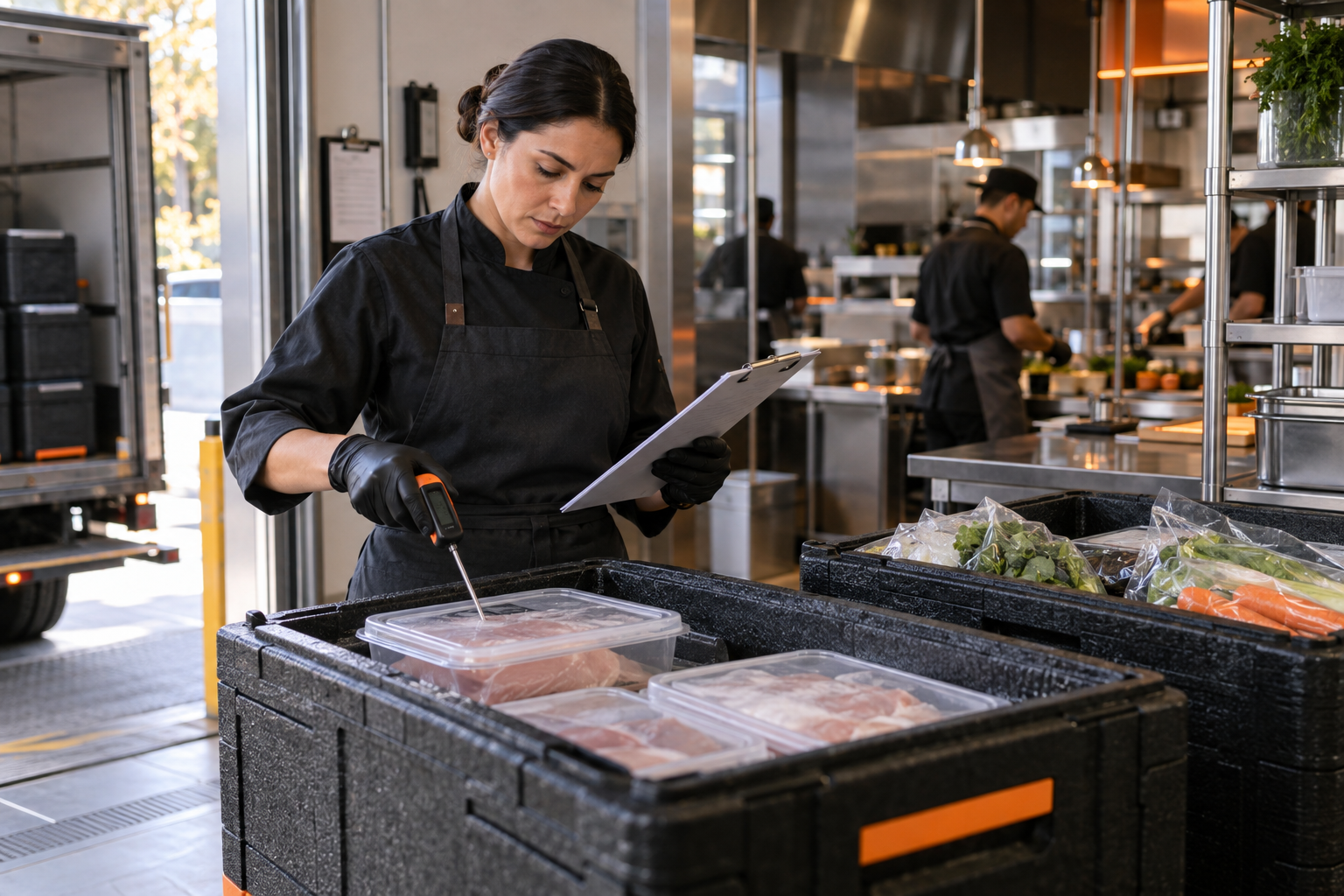
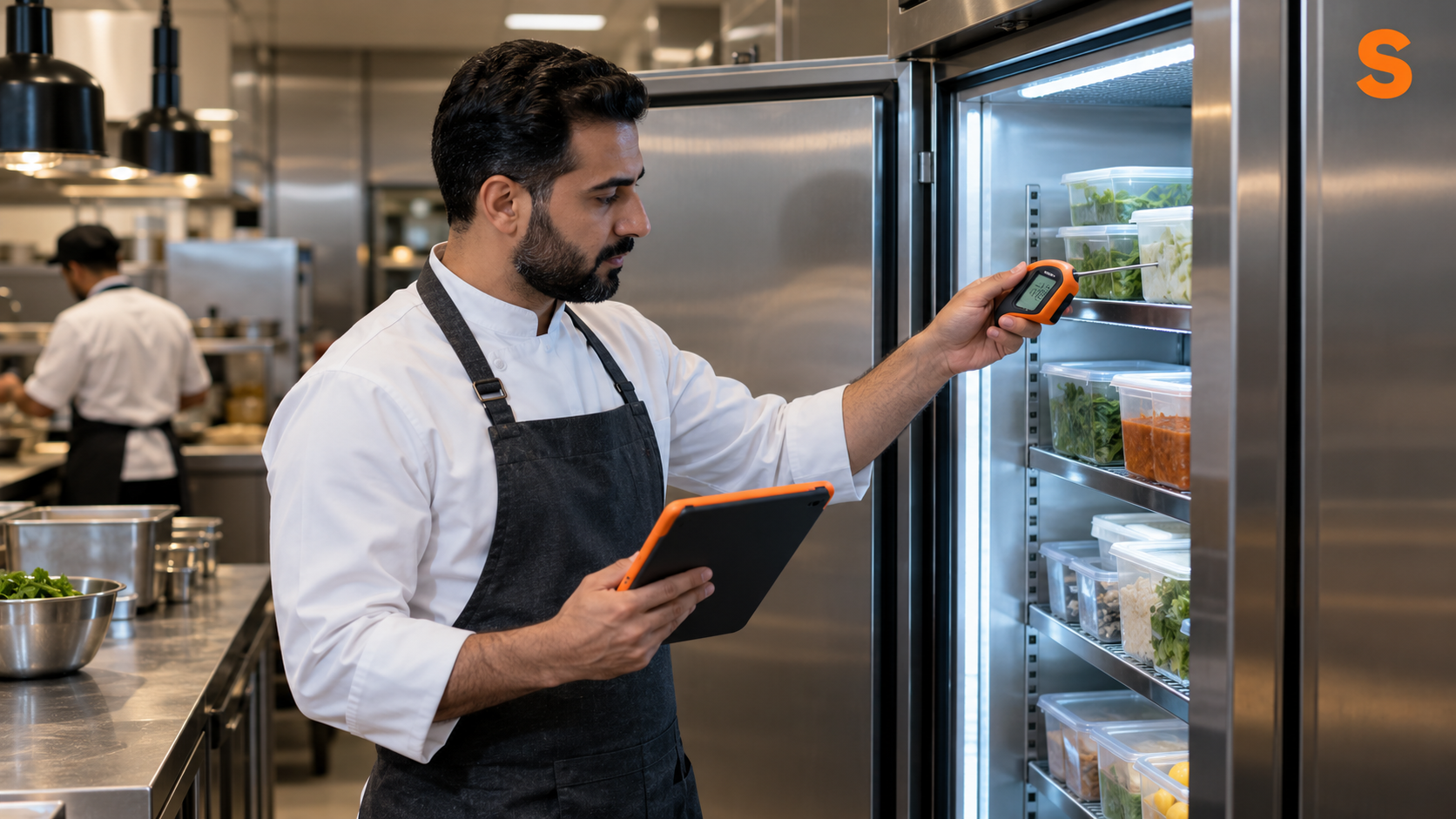
Use a suitable measuring device and ensure employees understand where and how to take each reading.
- Identify the correct unit.
- Read the thermometer inside the equipment.
- Avoid leaving the door open during measurement.
- Record the result immediately.
- Compare it with the approved range.
- Verify abnormal results using a reliable second thermometer.
- Check sensitive products if the abnormal result continues.
- Perform and document the corrective action.
- Take another reading to confirm recovery.
Employees should record the temperature they actually see, even when it is outside the accepted range.
What Should You Do When a Temperature Is Outside the Approved Range?
Do not automatically discard or retain all products based on one reading. Verify the result, then manage the equipment and products according to the level of risk and your approved procedure.
Corrective actions may include:
- Rechecking with another thermometer.
- Confirming that the door is properly closed.
- Reducing door opening while investigating.
- Checking whether products are blocking airflow.
- Measuring the temperature of sensitive products.
- Moving products to a functioning unit when required.
- Marking the equipment as unavailable if the problem continues.
- Contacting the manager or maintenance team.
- Documenting the final decision regarding affected products.
- Recording a follow-up reading.
Your restaurant policy should identify who can authorize product movement, equipment shutdown, or disposal. Leaving these decisions to individual judgment creates inconsistent responses between branches.
What Are the Most Common Temperature-Monitoring Mistakes?
Common failures often come from the process rather than the thermometer.
Recording a Standard Number Without Checking
Employees may enter the expected number simply to complete the task. Identical readings repeated every day can be a warning sign.
Recording Only Once a Day
A morning reading may not reveal what happens during peak service when doors are opened frequently.
Failing to Identify the Equipment
Writing “refrigerator is fine” provides little value when the branch operates several units.
Recording the Problem Without Acting
Knowing that the temperature is high does not protect the food. The alert must lead to a defined action and assigned follow-up.
Using an Unverified Thermometer
An inaccurate thermometer may create false confidence or unnecessary decisions. Establish a schedule for checking measuring devices according to manufacturer instructions.
Comparing Branches Without a Standard Method
Comparisons are unreliable when branches measure at different times or locations. Standardize equipment names, measurement times, and corrective procedures.
Why Are Paper Logs and WhatsApp Groups Not Enough?
Paper can record what an employee writes, but it does not automatically alert a manager when a problem occurs. Comparing records from several branches also takes time.
A WhatsApp group may help employees send a quick photo, but it does not create an organized history for each unit. Readings become buried between messages, and managers may not know whether the corrective action was completed.
The execution gap appears when:
- A manager discovers the reading several hours later.
- Nobody knows whether products were moved.
- Every branch records information differently.
- The same equipment problem keeps returning.
- No one is responsible for closing the issue.
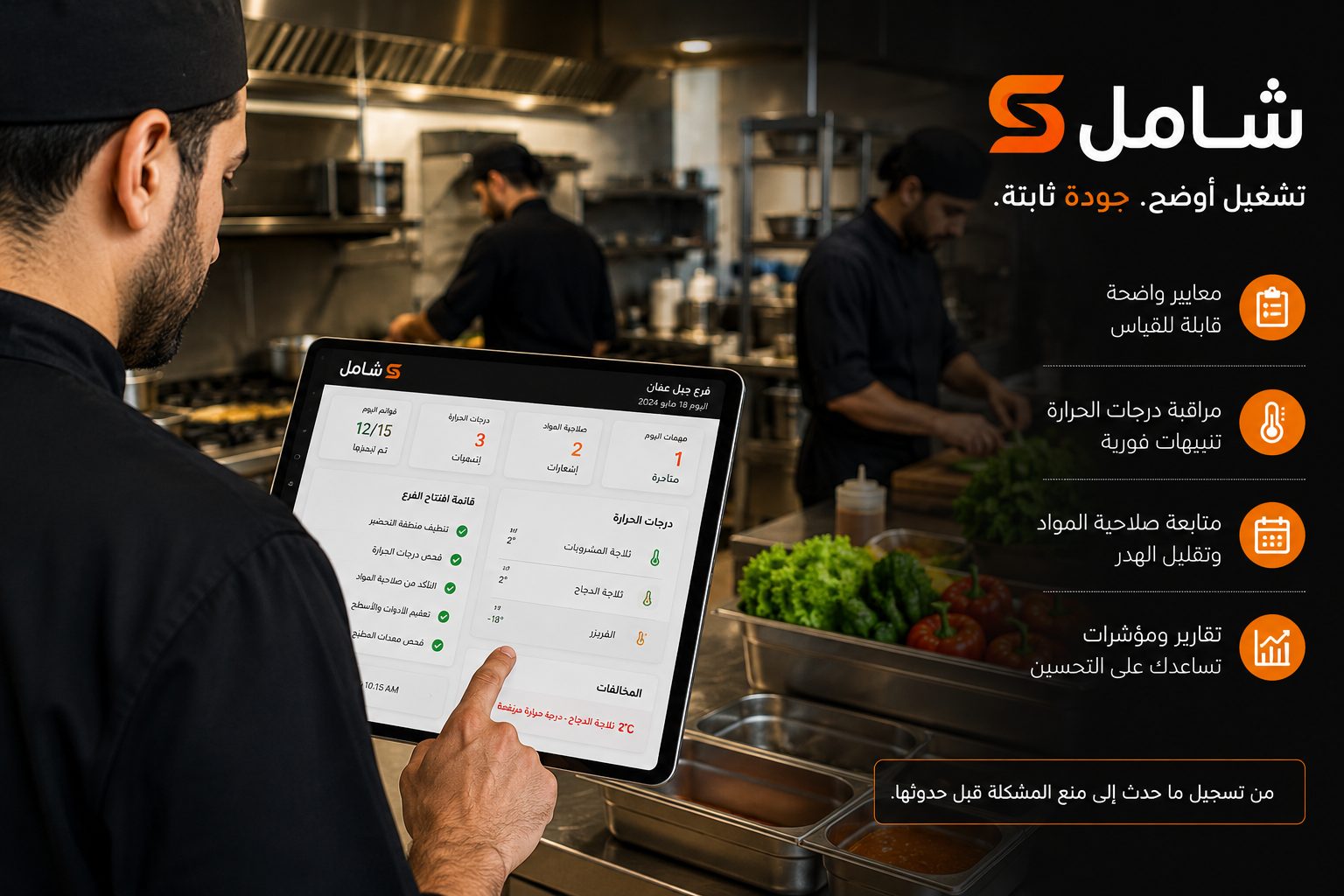
Shamel connects temperature readings to the branch, equipment, and employee, and can record an out-of-range reading as a violation requiring follow-up rather than leaving it as a number on paper or inside a message.
How Can You Start a Simple Temperature-Monitoring Process?
Start with a limited number of clear steps:
- List every refrigerator and freezer.
- Give each unit a name or number.
- Define its approved temperature range.
- Select consistent measurement times.
- Assign an employee during every shift.
- Define the required corrective actions.
- Review readings weekly to identify recurring equipment or time-related problems.
The goal is not to collect the largest number of readings. It is to identify failures and act before they affect food.
Frequently Asked Questions
Should You Measure Refrigerator Air or Food Temperature?
Monitor the refrigerator’s air temperature regularly and check food temperature during receiving or when equipment failure is suspected. Air temperature helps assess equipment performance, while product temperature gives a clearer view of the food’s actual condition.
Where Should a Refrigerator Thermometer Be Placed?
Place it away from the door and direct cold-air outlet in a location that represents the unit’s temperature. Large refrigerators may need multiple measurement points. Follow manufacturer guidance and review temperature distribution.
Should Food Be Discarded Immediately After a High Reading?
Not based on one reading alone. Verify the measurement, determine how long the problem may have existed, check sensitive products, and apply your restaurant’s approved food safety procedure and local requirements.
Who Should Record Temperatures?
Assign an employee during each shift and require a manager or supervisor to review abnormal readings and corrective actions. Clear ownership prevents everyone from assuming someone else completed the task.
How Can You Identify a Recurring Problem?
Review records by equipment, time, and branch. If high readings repeatedly occur in the same unit or period, investigate an operational or technical cause instead of treating every reading as an isolated event.
Try Shamel free for two months. Contact us on WhatsApp: +962 7 8135 9814