Last updated: September 4, 2026 Author: Mustafa Muhisen, Founder of Shamel
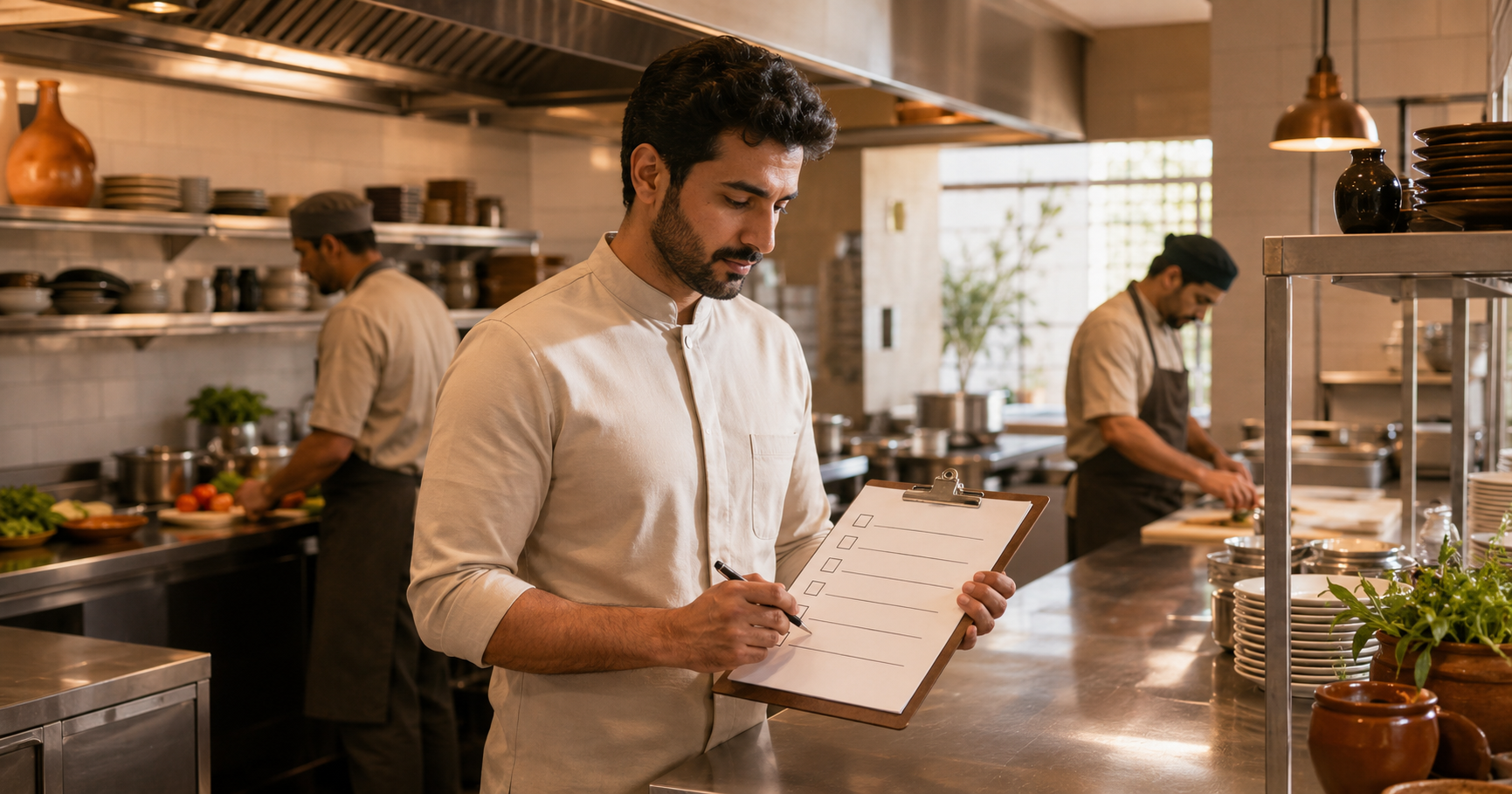
A restaurant opening checklist prepares the branch to serve customers safely and consistently, while a closing checklist ensures the day ends without unresolved tasks or risks. The first checks operational readiness before service begins. The second protects food, equipment, and the premises after service ends. Together, they reduce reliance on memory and make accountability easier to track.
What Is a Restaurant Opening Checklist?
A restaurant opening checklist is a set of tasks that must be completed and verified before the restaurant starts accepting orders. Its purpose is not simply to confirm that employees arrived. It ensures that the premises, equipment, ingredients, and team are ready for service.
The details vary by restaurant type, but a useful opening checklist usually covers five areas:
- Cleanliness and safety of the premises.
- Readiness of equipment and preparation areas.
- Refrigerator and freezer temperatures.
- Availability and shelf life of essential ingredients.
- Readiness of the team, point-of-sale system, and order collection areas.
The checklist should be completed before the doors open or online ordering channels are activated. If employees complete it after service has already started, it becomes a late record rather than a tool for preventing problems.
What Is a Restaurant Closing Checklist?
A restaurant closing checklist is a set of tasks used to end the operating day safely and consistently. It confirms that food has been stored correctly, work areas have been cleaned, equipment has been secured, and any issue requiring follow-up has been documented.
Closing a restaurant means more than locking the front door. Customer service may end while important work remains in the kitchen, storage areas, and dining room. The checklist should cover the period between the final order and the departure of the last responsible employee.
A closing checklist usually includes:
- Storing opened ingredients and labeling them correctly.
- Discarding unsuitable food according to the approved procedure.
- Cleaning and sanitizing surfaces and equipment.
- Checking refrigerator and freezer temperatures.
- Turning off the required gas and electrical equipment.
- Documenting shortages, incidents, and equipment faults.
- Securing doors, windows, and storage areas.
What Is the Difference Between Opening and Closing Checklists?
The main difference is that an opening checklist verifies whether the branch is ready to begin service, while a closing checklist verifies whether operations have ended safely and the restaurant is prepared for the following day.
During opening, employees check the dining area, kitchen, ingredients, and equipment before accepting orders. During closing, they store food, clean equipment, document unresolved problems, and secure the premises.
Some tasks may appear on both checklists, including temperature recording and cleanliness checks. However, the timing and reason for completing them are different.
At opening, the refrigerator temperature is recorded to confirm that ingredients are beginning the day under the required storage conditions. At closing, it is recorded to confirm that ingredients will remain stored correctly until the next shift.
The opening manager addresses problems before service begins. The closing manager documents unresolved issues and transfers them to the person responsible for the next shift.
What Should a Restaurant Opening Checklist Include?
An opening checklist should contain specific tasks that employees can complete and verify. Avoid vague instructions such as “make sure everything is ready.” They do not tell the employee what to inspect or help the manager identify where a failure occurred.
Check the Entrance and Exterior
- Clean the entrance and storefront.
- Remove obstacles from customer and employee walkways.
- Confirm that lighting and signs are working.
- Report visible damage that requires immediate attention.
Check the Dining and Service Areas
- Clean tables, chairs, and floors.
- Refill napkins, utensils, and service supplies.
- Confirm that point-of-sale and ordering devices are working.
- Organize pickup and delivery areas.
Check the Kitchen
- Inspect the cleanliness of preparation surfaces and sinks.
- Confirm that essential equipment is operating normally.
- Prepare clean tools and utensils.
- Separate raw ingredients from ready-to-eat food.
Check Storage and Shelf Life
- Record refrigerator and freezer temperatures.
- Check the expiry dates of ingredients required during the shift.
- Confirm that opened and prepared containers have identification labels.
- Arrange ingredients according to the restaurant’s approved stock-rotation procedure.
Check Team Readiness
- Assign responsibilities before the shift begins.
- Communicate shortages and unavailable menu items.
- Review notes from the previous shift.
- Identify the person responsible for approving the completed checklist.
What Should a Restaurant Closing Checklist Include?
A closing checklist should focus on anything that could become a safety risk, operational problem, or financial loss if left unresolved overnight. Every task should state what must be done, who performs it, and who verifies it.
Store Opened and Prepared Food
- Cover food and move it to the correct storage location.
- Label it with the product name, preparation or opening time, and expiry time.
- Record any discarded food and the reason for disposal.
- Do not leave unidentified or undated containers for the next shift.
Clean Work Areas
- Clean and sanitize preparation surfaces.
- Clean all tools and equipment used during the shift.
- Empty waste containers and move waste to the designated area.
- Leave sinks, floors, and drains in the required condition.
Secure Equipment and Utilities
- Turn off equipment that should not remain operational overnight.
- Close gas supplies according to the approved procedure.
- Keep refrigerators and freezers operating at their correct settings.
- Report unusual sounds, leaks, or visible faults.
Transfer Notes to the Next Shift
- Record ingredient and supply shortages.
- Document unresolved equipment problems.
- Identify delayed tasks and explain why they were not completed.
- Send the notes through the approved handover process instead of leaving them in a personal conversation that may not be seen.
How Do You Create an Actionable Restaurant Checklist?
Write every task as a clear action and connect it to a time, an employee, and a verification method. A shorter and clearer checklist is more useful than a long one that employees complete without performing proper checks.
Follow these steps:
- Observe an actual shift and record the essential work completed before opening and after closing.
- Divide the tasks by area, such as the dining room, kitchen, storage, equipment, and security.
- Use one clear action in each item. Write “Record the refrigerator temperature” instead of “Check the kitchen.”
- Assign a completion time to every task.
- Identify the employee responsible for execution and the person responsible for verification.
- Define the required action when a task fails.
- Review the checklist after one week and improve it based on actual use.
For example, do not write “Check the refrigerator.” Write: “Record the refrigerator temperature before opening and notify the shift manager if the reading is outside the approved range.”
This tells the employee what to do, gives the manager a way to verify completion, and defines what should happen when a problem is found.
Why Do Restaurant Checklists Fail?
Restaurant checklists often fail because completing the form becomes the goal. An employee marks the tasks as completed, but nobody reviews when they were completed, which tasks failed, or which problems keep returning.
Common execution gaps include:
- Using the same checklist for every branch despite differences in equipment and layout.
- Combining several tasks into one unclear item.
- Failing to assign a person to review the checklist.
- Recording a problem without creating a corrective action.
- Discovering missed tasks only after a customer complaint or inspection.
- Storing paper records without reviewing recurring patterns.
The checklist should be treated as an operational control point. When an item fails, the record should show what happened, who addressed it, and whether the corrective action was completed or remains open.
How Can a Digital System Improve Checklist Tracking?
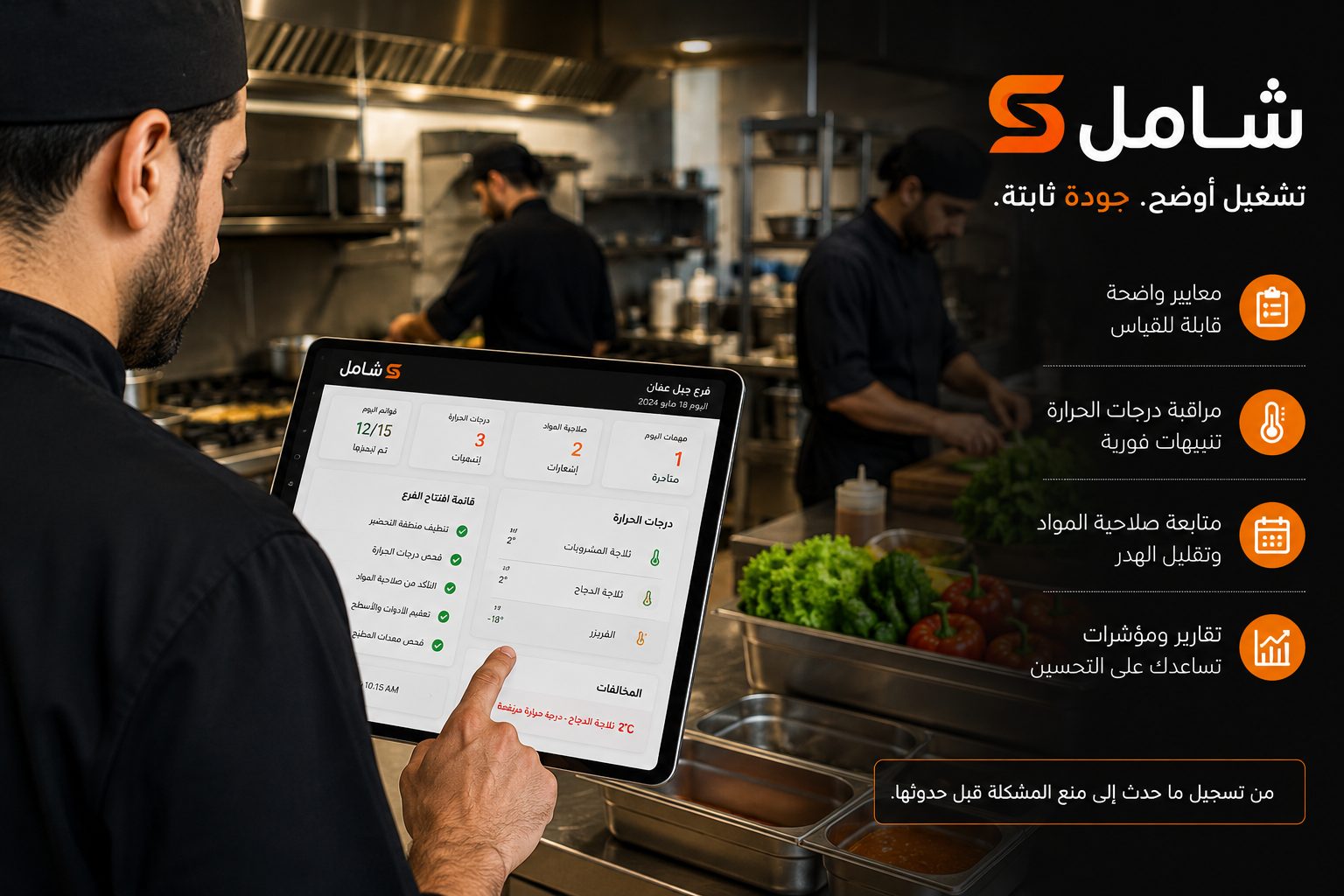
A digital checklist connects every task to a branch, time, and employee. It also shows managers which tasks were missed without requiring them to collect and review paper forms. In Shamel, restaurants can create measurable daily opening and closing checklists and record missed tasks as violations connected to corrective actions.
Who Is Responsible for the Restaurant Opening Checklist?
Each checklist item should have a clearly assigned employee, while the shift manager or opening supervisor approves the completed checklist. One person does not have to perform every task, but someone must be responsible for confirming completion and addressing failed items before service begins.
When Should the Opening Checklist Be Completed?
The opening checklist should be completed early enough to allow the team to correct problems before accepting orders. Completing it as the doors open is not enough. A refrigerator fault or missing essential ingredient may require time to address, so each group of tasks should have a clear deadline.
Can Every Restaurant Branch Use the Same Checklist?
Branches can share a set of standard tasks, but equipment, service style, and layout-specific items should be customized. A branch with a delivery pickup area or additional equipment requires different tasks. Start with a standard template, then create a suitable version for each branch type.
Should Restaurants Keep Opening and Closing Checklist Records?
Keeping checklist records helps managers review compliance, identify recurring problems, and confirm which tasks were completed. The retention period depends on company policy and local regulatory requirements. Most importantly, records should remain searchable and easy to review instead of being stored in files that nobody checks.
How Many Items Should a Restaurant Checklist Contain?
There is no single number that works for every restaurant. Use the smallest number of items that clearly covers the important control points. If the checklist becomes too long, divide it by area or responsible employee rather than removing necessary tasks. Review completion time and missed items to improve it.
What Should Happen When a Checklist Item Is Not Completed?
Do not stop at marking the item as incomplete. Record the reason, define the immediate corrective action, and assign someone to follow up. Some failures may prevent service from starting in a particular area, while others can be addressed during the shift. The restaurant’s policy should define the difference in advance.
Try Shamel free for two months. Contact us on WhatsApp: +962 7 8135 9814