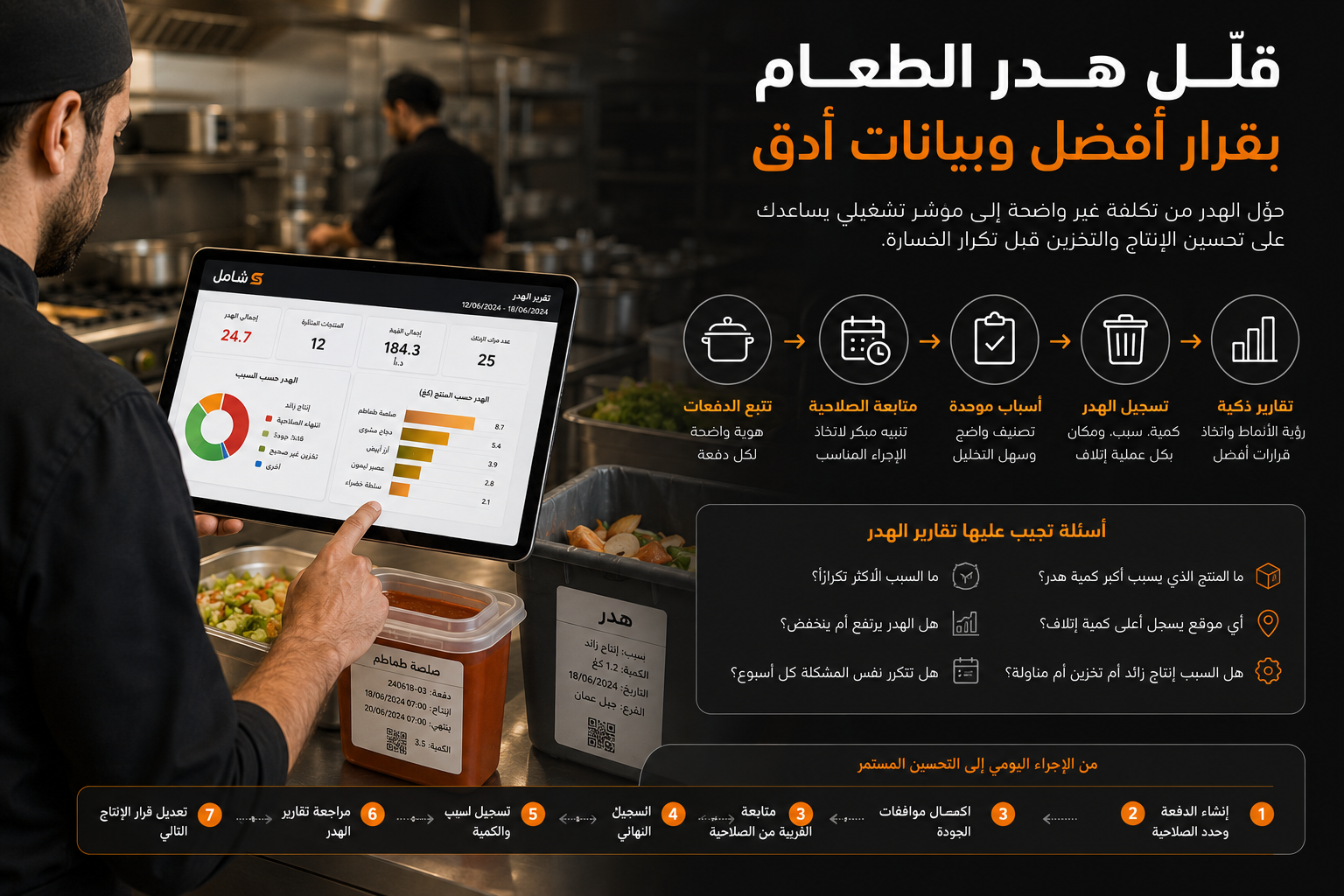
Food waste rarely starts with one dramatic mistake. It usually grows through small daily gaps: a batch is prepared without a clear identity, an expiry time is remembered instead of recorded, an item is discarded without a reason, or the same overproduction happens every week without anyone connecting the pattern.
For restaurant operators, the goal is not simply to record what was thrown away. The goal is to understand why it happened early enough to change production, storage, and follow-up.
Give every batch a clear identity
Waste tracking becomes more useful when every prepared batch has its own record. At minimum, that record should include the product, quantity, production date and time, expiry date and time, source location, destination location, and the people responsible for production and approval.
This creates traceability. Instead of saying “we discarded lemon juice,” the team can identify the exact batch, how many units were produced, where they were sent, when they expired, and what happened before disposal.
Track expiry by date and time
A date alone is not always enough for freshly prepared food. If a product has a 24-hour or 48-hour shelf life, the production time matters. A batch produced at 7:00 AM should not be treated the same as one produced at 7:00 PM.
Recording the exact expiry time allows the team to see what is approaching its limit and act while there is still an operational choice. Depending on the product and approved food-safety procedure, that may mean prioritising its use, adjusting the next production quantity, moving it through the correct approval workflow, or disposing of it on time.
The purpose of an expiry alert is not to create another notification. It is to create enough time for a responsible decision.
Standardise the reasons for waste
If every employee writes a different description, the report quickly becomes difficult to analyse. Use a short list of recurring reasons, with an “Other” option for exceptional cases.
Useful categories can include:
- Overproduction
- Expired before use
- Quality check failed
- Incorrect storage or temperature
- Preparation or handling error
- Spillage or damage
- Customer return
- Other
The employee should also record the quantity discarded, the related batch, the location, and a short note when “Other” is selected.
This turns waste from a vague cost into structured operational data.
Separate the action from the approval state
Marking a batch as sold or discarded should not change its quality approval history. Approval answers one question: did the batch pass the required production and receiving checks? The final action answers another: was the approved batch sold, discarded, or otherwise closed?
Keeping these states separate protects the audit trail and prevents the team from losing the original quality decision when closing an expiry item.
Look for patterns, not isolated incidents
A useful waste dashboard should answer practical questions:
- Which product creates the most waste?
- Which location records the highest discarded quantity?
- What is the most common reason?
- Is waste rising or falling over the selected period?
- Are the same products expiring at the same time each week?
- Is the problem overproduction, storage, handling, or failed quality?
One discarded batch may be normal. The same product being discarded every Tuesday is a pattern. It may indicate that the production plan is based on habit rather than actual demand.
Review waste every week
A short weekly review is more effective than waiting for a large monthly number. Start with the top wasted product, the top reason, and the location with the biggest change. Then assign one corrective action and check its result the following week.
The action might be reducing the batch size, changing the preparation time, improving rotation, retraining an employee, reviewing shelf life, or fixing a storage problem.
Do not try to solve every cause at once. Consistent small corrections are easier to measure and sustain.
A practical daily workflow
A reliable process can be simple:
- Create the batch with its quantity and exact expiry.
- Complete the required quality approvals.
- Monitor batches approaching expiry.
- Record the final action: sold or discarded.
- If discarded, select a standard reason and enter the quantity.
- Review the dashboard by product, location, reason, and period.
- Adjust the next production decision based on the pattern.
The most important shift is moving from “how much did we lose?” to “what should we change before the next batch?”
Shamel connects batch traceability, expiry monitoring, quality approvals, and waste reporting in one operational record. That gives restaurant teams a clearer path from daily action to measurable improvement.